Mokena Targets Invasive Callery Pear Trees for Removal
The Village of Mokena is taking proactive steps to improve its urban forest by removing dozens of invasive Callery Pear trees from public parkways, funded in part by a grant from The Morton Arboretum.
On June 23, the Village Board awarded a $15,484 contract to Homer Tree Care Service of Lockport to remove approximately 60 of the problematic trees throughout the village, with about 10 located along Front Street.
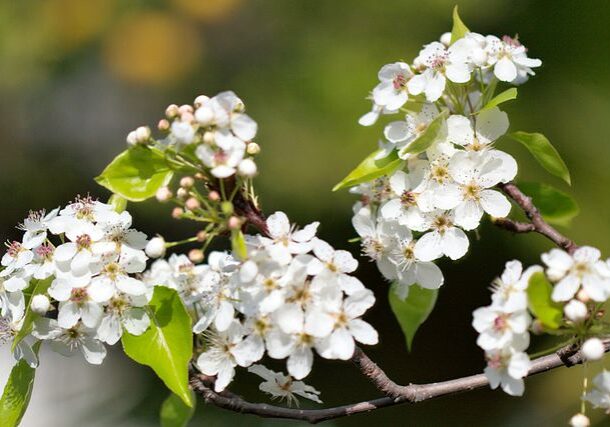
The Callery Pear, often sold as the Bradford Pear, was designated as an invasive species by the State of Illinois in 2023. Public Works Director Dan Peloquin explained that while the trees are known for their showy white flowers and rapid growth, they have significant drawbacks.
“The Callery Pear is problematic in that it is generally a weak tree, susceptible to a lot of damage, especially in snow and ice storms,” Peloquin said. He added that the tree’s seeds are easily dispersed, allowing it to take over open spaces and crowd out native species.
The removal project is being funded through a grant from The Morton Arboretum as part of the Chicago Region Tree Initiative. The grant requires the village to replace the removed trees at a 2-to-1 ratio, helping to diversify and strengthen the local tree canopy. The new trees will be planted as a separate project coordinated with appropriate planting seasons.
The project will be an ongoing effort over several years. Trees slated for removal will be marked, and stumps will be ground down and restored with dirt and seed after removal.
Community Events
Latest News Stories

WATCH: UW-authored study on surgery times contradicts CMS basis for reimbursement cuts

State defends gun ban district court ruled unconstitutional

Trump aiming for ceasefire, world awaiting news from Putin summit
Pritzker acts upon 269 bills, vetoes 2, signs ‘lawsuit inferno’ measure

Report: average American to receive $3,752 tax cut in 2026 due to OBBBA

Republican, Dem work to prevent deportation of entrepreneur
Nevada superintendent says ICE won’t enter schools
Will County Updates Solid Waste Ordinance, Increases Fines and Reporting to Landfill Committee
Citing Liability Concerns, Will County Committee Postpones Vote on Septic System Ordinance
Will County Moves to Repeal Obsolete 1972 Fire Hydrant Ordinance
MAHA-style bill would close food additive safety loophole
Will County Board Gets Back to Basics with Robert’s Rules of Order Training