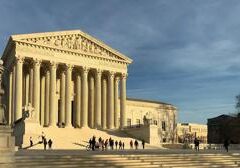
Supreme Court declines to hear challenge to Illinois public transport gun ban
The U.S. Supreme Court on Monday declined to decide whether individuals can carry firearms on public transportation.
The court declined to take up Schoenthal v. Raoul, which challenges an Illinois law banning citizens from carrying firearms on public transportation. Three Illinois residents challenged the ban, arguing it violates the Second and Fourteenth Amendment rights.
“There is no historical tradition of banning law-abiding citizens from possessing firearms in crowded public locations where they may be more vulnerable,” lawyers wrote in a petition to the court.
Illinois requires gun owners to acquire a Firearm Owner’s Identification Card and a concealed carry license in order to carry a firearm in public. However, the state bans individuals from carrying a loaded or unsecured firearm onto buses, trains or any other type of public transportation that is paid for in part or whole by public funds.
Kwame Raoul, Illinois’ attorney general, argued the prohibition on guns in public transportation is consistent with the nation’s historical tradition limiting firearms in sensitive places, like court rooms, schools and polling places.
“Like historical sensitive places, public transit features ‘confined areas with a high density of people,’ making firearms ‘exceptionally dangerous,’” Raoul wrote.






Slight Chance Showers And Thunderstorms
Latest News Stories

Georgia doctors face scrutiny as they cozy up to injury lawyers

Wiener, Gallagher, Gray lead in congressional races
Waters, other incumbents ahead in LA congressional races
Desmond, Wilpert ahead in District 48 race to succeed Issa
Candidates advance in redrawn congressional districts

Kiley, Pan neck to neck in Congressional District 6 race

Bass, Pratt lead Los Angeles mayoral race

Becerra, Hilton to face each other in gubernatorial race
Miller-Meeks, Bohannan to face off again in November

Gulf allies targeted by Iran as strikes continue despite ceasefire

U.S. Supreme Court approves Alabama redistricting map
Illinois slaps limits on non-lawyer investor power in law firms