USDA reverses use of taxpayer dollars to fund solar panels on farmland
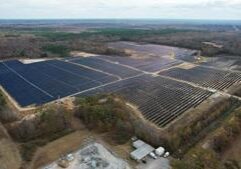
The U.S. Department of Agriculture will no longer subsidize large-scale solar projects placed on farmland or use solar panels manufactured by foreign adversaries in any agency projects, according to a news release Tuesday.
Hundreds of billions of taxpayer dollars have gone towards solar and other “green” energy initiatives since 2022 alone. Roughly 47% of utility-scale solar projects are located on farmland as of 2025, according to Agricultural Economic Insights, and solar panels on American farmland have increased by 50% since 2012, according to USDA.
“Our prime farmland should not be wasted and replaced with green new deal subsidized solar panels,” USDA Secretary Brooke Rollins said. “Subsidized solar farms have made it more difficult for farmers to access farmland by making it more expensive and less available. We are no longer allowing businesses to use your taxpayer dollars to fund solar projects on prime American farmland, and we will no longer allow solar panels manufactured by foreign adversaries to be used in our USDA-funded projects.”
As part of the change, both solar and wind projects will no longer be eligible for the USDA Rural Development Business and Industry Guaranteed Loan Program.
Prospective recipients of the USDA Rural Development Rural Energy for America Program (REAP) Guaranteed Loan Program will only be eligible for the subsidies if their solar photovoltaic systems are smaller than 50kW.
Tennessee will particularly feel the impact of the change as it has lost more than 1.2 million acres of farmland over the last 30 years. Both the Republican governor and U.S. lawmakers, including some representing Tennessee, praised the USDA’s decision.
“Tennessee farmland should be used to grow the crops that feed our state and country, not to house solar panels made by foreign countries like Communist China,” Sen. Marsha Blackburn, R-Tenn., stated. “Secretary Rollins and President Trump are right to put an end to these Green New Deal subsidies that waste taxpayer dollars while threatening America’s food security.”
The move follows the Environmental Protection Agency’s rescission of $7 billion in Solar for All community grants and the Department of Interior’s plans to increase production of more traditional sources of energy like oil and gas.




Mostly Sunny
Latest News Stories

Independent candidate blasts election measure

Everyday Economics: A stable labor market is not enough

Fishermen advocate begins campaign against offshore wind, ‘industrializing’ of the ocean

Sorensen drug-pricing bill draws criticism from former FDA official

Supporters, critics clash over future of taxpayer funding for Rx Kids

U.S. Senate race headlines Maine primaries as voters head to polls Tuesday
Bessent backs 3% deficit goal despite 5% budget forecasts

Constables hope to find missing children in immigration search effort

Lawmaker blasts reports of ‘equitable assessments’ at medical school

FOID changes advance in Illinois House, not called in Senate

Texas tops California, New York, with the most Fortune 500 headquarters

Nine candidates run in Las Vegas congressional district