WATCH: IL Department of Human Services’ adverse audit draws legislators’ ire
(The Center Square) – A recent adverse audit of the Illinois Department of Human Services is the worst audit seen by the cochairman of the Legislative Audit Commission.
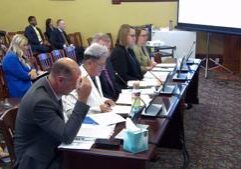
An official from the Illinois Auditor General explained the adverse findings during a commission hearing Friday for the most recent two-year audit of the agency.
“This means that while we obtained sufficient, appropriate audit evidence, the misstatements individually or in the aggregate were both material and pervasive to the subject matter,” the official said. “To such an extent, we expressed an adverse opinion pursuant to the codification of statements on standards for attestation engagements.”
State Sen. Chapin Rose, R-Mahomet, is the co-chair of the Legislative Audit Commission.
“This is quite frankly one of the worst audits I’ve ever seen,” Rose said. “And it’s so bad you don’t even know where to start. But let’s start with the taxpayers, and then we’ll conclude with the human beings whose lives are caught up in this.”
There were 33 total findings in 2021 and 32 in 2023. Of those, 25 were repeated with seven being new.
State Rep. Charlie Meier, R-Okawville, called for the audit. He said constituents dealing with DHS are being left behind and the audits show the agency is keeping poor records.
“So when I asked earlier about how many are in jail, that’s where these residents end up at because they’re not a one on one in the [Community Integrated Living Arrangements] when they’re supposed to be,” Meier said. “You’re standing here taking a major amount of the state taxpayers dollars. And it’s like they’re playing a board game of monopoly, moving these people around instead of getting them the services they need.”
Rose also noted the state’s handling of federal Supplemental Nutrition Assistance Program funds.
“But now let’s get to something that is even, quite frankly, more important than the $700 million we’re potentially going to lose. And that’s these human lives, this restraint stuff,” Rose said. “It’s just stunning.”
One of the audit findings was the population of patient restraints being issued couldn’t be substantiated, nor could the number of employees qualified to order restraints, a finding repeated since 2017.
Rose said he understands employees of facilities where some youth are being treated are “dealing with individuals who maybe have some of the worst afflictions known to man” and could be difficult to deal with “through no fault of their own.”
“But that’s why we have policies and procedures, and we got to follow those policies and procedures,” Rose said. “Otherwise, imagine being that human being, cannot communicate verbally, struck in a restraint for hours with no ability to say they got to go to the bathroom. That’s just flat out wrong. And by the way, this one has gone on for decades.”
Agency officials said they are working on corrective action plans to address repeated audit findings.





Mostly Sunny
Latest News Stories

Washington high court: State will strip gun rights after two DUIs

Extension of pension buyout program to drop $144B liability

Man pleads guilty in killings of Minnesota House speaker, husband

Fraud, price gauging, terrorism concerns plague World Cup debut in US
Trump cancels impending strikes on Iran, final deal pending
FBI arrests eight accused of ‘terrorizing’ U-M leaders, Jewish Federation

Colorado’s only ICE detention center operator sues state
U.S. House fails to renew spy powers authority as World Cup begins

House panel opposes adding U.S. Supreme Court justices

Schools face bus funding, cost challenges

Ohio pulls 1,200 commercial truck licenses for immigration guidelines

First fugitive on FBI’s ‘Most Wanted Fraudsters’ list surrenders in Minneapolis