
Will County Board Formally Opposes Heavier, Longer Trucks on National Roadways
Article Summary: The Will County Board unanimously passed a resolution opposing any federal legislation that would increase the size and weight limits for commercial trucks on the nation’s roadways. The resolution cites significant risks to public safety and accelerated damage to local and state infrastructure not designed for such vehicles.
Truck Size and Weight Legislation Key Points:
-
Opposition: The board opposes federal proposals to authorize 91,000-pound trucks and longer “Double 33s” double-trailer combinations.
-
Safety Concerns: The resolution states that larger trucks require longer stopping distances, have reduced maneuverability, and increase the severity of crashes.
-
Infrastructure Impact: The board argues that local roads and bridges were not designed for such oversized vehicles, which would accelerate wear and tear, leading to costly repairs.
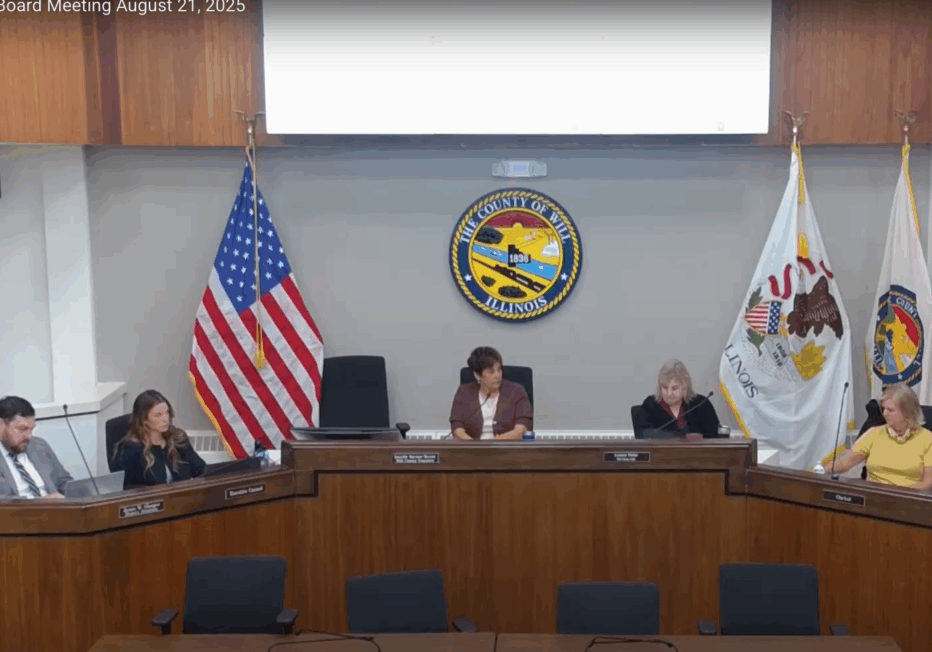
JOLIET, IL – Citing concerns over public safety and the integrity of local infrastructure, the Will County Board on Thursday unanimously approved a resolution formally opposing federal proposals to allow bigger and heavier trucks on the nation’s roads.
The resolution, which passed without discussion as part of the Legislative Committee’s consent agenda, targets potential federal legislation that would authorize 91,000-pound trucks and longer double-trailer combinations, known as “Double 33s,” to operate more widely.
The board’s resolution argues that “heavier and longer trucks pose increased risks to public safety, as they require longer stopping distances, reduce maneuverability, and increase the severity of crashes, particularly on non-interstate roadways.”
Will County, a major logistics and freight hub, experiences heavy truck traffic, and the resolution emphasizes that its local and state infrastructure was not designed to handle the stress of such oversized vehicles. The document warns that allowing these trucks would “significantly accelerate wear and tear and lead to costly repairs and structural failures.”
Furthermore, the board stated that increasing truck size and weight limits would shift “hidden costs of freight transport—including infrastructure damage, public safety response, and environmental impact—onto local governments and taxpayers.”
The resolution aligns Will County with the Coalition Against Bigger Trucks (CABT), a national group of law enforcement officials, emergency responders, and safety advocates who have expressed opposition to the proposals. The county’s resolution notes that these groups have cited “documented risks and insufficient data on safety or infrastructure impacts” related to allowing larger trucks.
The approved resolution formally states that the Will County Board “opposes any federal legislation that would authorize heavier or longer trucks… on the nation’s roadways without a full and independent safety and infrastructure assessment.”
Copies of the resolution will be forwarded to the Will County Congressional Delegation, the Illinois Department of Transportation, and the National Association of Counties (NACo) to officially register the county’s position.
Mostly Sunny then Slight Chance Showers And Thunderstorms
Latest News Stories
Indian reservation focus of human smuggling probe at U.S.-Canada border

WATCH: Family, friends remember Bailey family at celebration of life

WATCH: Amid criticism, Pritzker defends using expletive to tell Trump where to go

Election integrity advocates urge reform after Illinois scores low in global survey

WATCH: Pritzker’s rhetoric criticized; tax amnesty program; status of Guard lawsuit
Illinois quick hits: Pritzker uses expletive with teachers union; Paprocki reacts to assisted suicide bill
Mokena Awards $204,888 Contract for Wastewater Pump Replacement
Congressional Perks: House account spending jumped 21% in 2022
Everyday Economics: Rate cut debate: Reading mixed signals in a fragile economy
Arizona looks to legal immigration with Trump’s border security

Ranchers decry beef imports from Argentina, expert says good start
Mokena Park District Increases Spending Authority to Align with New State Law