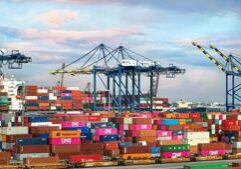
World’s largest retailer struggles to keep costs down as tariffs hit
The world’s largest retailer says it’s doing everything it can to keep prices low as its costs increase each week due to the tariffs at the center of a high-profile legal challenge.
Walmart CEO Doug McMillon told investors that the company could be forced to raise prices further due to tariff pressure.
“With regard to our U.S. pricing decisions, given tariff related cost pressures, we’re doing what we said we would do,” he said. “We’re keeping our prices as low as we can for as long as we can.”
However, not even the Arkansas-based retail giant can entirely blunt the impact of the highest tariff rates in nearly a century.
“But as we replenish inventory at post-tariff price levels, we’ve continued to see our costs increase each week, which we expect will continue into the third and fourth quarters,” McMillon said during the company’s most recent earnings call.
Some small businesses and Democrat-led states filed suit in April challenging Trump’s tariff authority.
Trump’s Solicitor General, D. John Sauer, asked the U.S. Supreme Court to take up the case on an expedited schedule this week. The administration fears unwinding Trump’s trade deals will lead to an “economic catastrophe.”
Trump used a 1977 law that doesn’t mention tariffs to reorder global trade through tariffs to try to give U.S. businesses an advantage in the world market. Using tariffs under the International Emergency Economic Powers Act, Trump hit nearly every nation with import duties of at least 10%. Some countries face higher rates, up to 50%.
Two lower courts have already said the 1977 International Emergency Economic Powers Act doesn’t give the president unbounded tariff authority.
Last week, the U.S. Court of Appeals for the Federal Circuit affirmed a previous lower court ruling, but said Trump’s tariffs could remain in place while the administration appeals to the U.S. Supreme Court. In the 7-4 decision, the majority said that tariff authority rests with Congress.
Sauer asked the Supreme Court to decide by Sept. 10 whether to take up the case. He also asked for “expedited consideration of the merits to the maximum extent feasible.”
Sauer’s proposed schedule – which the high court has yet to agree to – calls for briefs to be filed in the case by Oct. 20 and oral arguments set for the first week of November.
New tariffs raised $58.5 billion in revenue between January and June of this year before accounting for income and payroll tax offsets, according to an analysis of federal data from the Penn Wharton Budget Model. The study found that the average effective tariff rate increased to 9.14% in June from 2.2% in January, when Trump returned to office.
Trump has said he wants to use tariffs to restore manufacturing jobs lost to lower-wage countries in decades past, shift the tax burden away from U.S. families and pay down the national debt.
A tariff is a tax on imported goods paid by the person or company that imports the goods. The importer can absorb the cost of the tariffs or try to pass the cost on to consumers through higher prices.
Economists, businesses and some public companies have warned that tariffs could raise prices on a wide range of consumer products.
Community Events
Latest News Stories

Report: Hegseth violated multiple protocols and federal law in ‘Signalgate’

Illinois quick hits: Another attack on CTA passenger; plaintiffs move to dismiss their ICE use of force case
Some push for FDA approval of psychedelic treatments for veterans

WATCH: Pritzker: ‘No’ to state taxpayer-funded guaranteed income
WATCH: IL congresswoman willing to withhold highway dollars over CDL issues

Disability group, coroners press governor ahead of assisted suicide decision

Mokena Library Board Approves Tax Levy Determination with 1.76% Increase
Meeting Summary and Briefs: Lincoln-Way Community High School District 210 for November 20, 2025

WATCH: U.S. Rep. Miller live; Heated rhetoric in Congress; SNAP, ‘basic income’ debate

Illinois quick hits: Layoff announcements; Freedom Caucus criticizes library association

Illinois quick hits: Job training grants announced; products market moving indoors

Chicago aldermen advance ordinance to restrict hemp sales