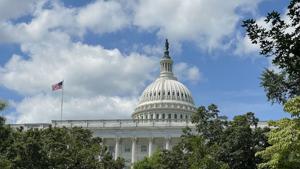
Supreme Court allows ICE to factor race, workplace into L.A. raids
The U.S. Supreme Court ruled Monday to temporarily allow U.S. Immigration and Customs Enforcement officers to use race, native language and place of work to partly justify immigration raids.
The court’s conservative majority granted the administration’s emergency application for a stay on a lower court’s decision, with its three liberal justices dissenting. Though the order was reportedly brief and unsigned, Justice Brett Kavanaugh wrote a concurring opinion.
“Immigration officers ‘may briefly detain’ an individual ‘for questioning’ if they have ‘a reasonable suspicion, based on specific articulable facts, that the person being questioned … is an alien illegally in the United States,’” Kavanaugh wrote. “The reasonable suspicion inquiry turns on the ‘totality of the particular circumstances.’”
Kavanaugh was responding to U.S. District Judge Maame Frimpong’s order that prohibited ICE officials from using several factors to form reasonable suspicion.
“Defendants may not rely solely on the factors … alone or in combination of” a person’s race or ethnicity, their spoken language or accent, their place of work or their location, according to Frimpong.
While the administration cannot base an immigration stop on someone’s race alone, Kavanaugh said it could, along with other factors, provide a reasonable suspicion, especially since the legal bar for reasonable suspicion is lower than it is for probable cause.
“Reasonable suspicion is a lesser requirement than probable cause and ‘considerably short’ of the preponderance of the evidence standard,” Kavanaugh continued.
The case is currently before the 9th U.S. Circuit Court of Appeals.





Slight Chance Showers And Thunderstorms
Latest News Stories

WATCH: DCFS updates missing children numbers; Budget cuts EO transparency criticized
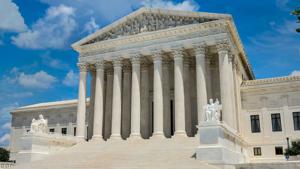
Supreme Court declines to hear public prayer case

Supreme Court to decide immigration asylum case

Illinois quick hits: Armed robbery charges after incident at Senate President’s office

Michigan school board passes controversial sex ed policies

Everyday Economics: Jobs data returns as government reopens

Meeting Summary and Briefs: Will County Land Use & Development Committee for November 6, 2025

Committee Rejects Rezoning for Fencing Company in Joliet Township
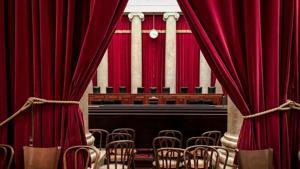
Supreme Court case could have major effect on 2026 midterms
County Sales Tax Revenues Strong, Cannabis Funds Dispersed to Community Programs

Illinois sports wagers decline after implementation of new tax

Will County Committee Grants Extensions for Crete, Washington Township Solar Projects

Competing crypto plans create ‘narrow path’ for adoption

Congress used government funding bill to ‘erase’ $3.4 trillion in deficits