JPMorganChase to invest $10B in U.S. firms key to national security
JPMorganChase said Monday it would invest $10 billion in industries tied to U.S. national security as part of a decade-long plan to help protect the U.S. economy as global trade tensions rise.
JPMorganChase’s Security and Resiliency Initiative is a $1.5 trillion, 10-year plan “to facilitate, finance and invest in industries critical to national economic security and resiliency.” The bank will make direct equity and venture capital investments of up to $10 billion to help U.S. companies. That includes defense contractors, minerals and artificial-intelligence companies.
“It has become painfully clear that the United States has allowed itself to become too reliant on unreliable sources of critical minerals, products and manufacturing – all of which are essential for our national security,” JPMorganChase Chairman and CEO Jamie Dimon said in a statement Monday morning. “Our security is predicated on the strength and resiliency of America’s economy.”
The announcement from the largest U.S. bank comes amid rising trade tensions with China over access to rare earth minerals. Last week, Beijing tightened restrictions on the export of products containing even trace amounts of rare earth minerals. China holds most of the world’s rare earth minerals, which are crucial for advanced manufacturing, including military equipment, cars and electronics.
“America needs more speed and investment,” Dimon said. “It also needs to remove obstacles that stand in the way: excessive regulations, bureaucratic delay, partisan gridlock and an education system not aligned to the skills we need.”
Dimon’s comments come amid an ongoing partial federal government shutdown after Congress allowed funding to lapse.
The bank said its investment “comes at a time when the U.S. is looking to modernize infrastructure, fortify supply chains, and implement policies that promote growth.”
JPMorganChase will focus on supporting companies involved in supply chain and advanced manufacturing, including critical minerals, pharmaceutical supplies and robotics; defense and aerospace, including defense technology, autonomous systems, drones, next-gen connectivity and secure communications; energy independence and resilience, including battery storage, grid resilience and distributed energy; frontier and strategic technologies, including AI, cybersecurity and quantum computing. Among those four broad categories, JPMorganChase said it will 27 sub-areas including shipbuilding, nuclear energy, nanomaterials and critical defense components.
“This new initiative includes efforts like ensuring reliable access to life-saving medicines and critical minerals, defending our nation, building energy systems to meet AI-driven demand and advancing technologies like semiconductors and data centers,” Dimon said. “Our support of clients in these industries remains unwavering.”
China announced last Wednesday that foreign entities must get a license to export products containing trace amounts of rare earths found in China or made using China’s extraction process. In response, President Donald Trump on Friday said imports from China will face a new 100% tariff “over and above” existing import taxes on the world’s second-largest economy. U.S. markets dropped as tensions again rose between the two super powers.
After two fiery social media posts on Friday regarding China, Trump struck a more positive tone on Sunday.
“Don’t worry about China, it will all be fine! Highly respected President Xi just had a bad moment,” the U.S. president wrote. “He doesn’t want Depression for his country, and neither do I. The U.S.A. wants to help China, not hurt it!!!”
Dimon said speed was key: “We need to act now.”
Trump has used tariffs to quickly reorder global trade in the past seven months. Economists, businesses and some publicly traded companies have warned that tariffs could raise prices on a wide range of consumer products throughout the U.S.
Trump has said he wants to use tariffs to restore manufacturing jobs lost to lower-wage countries in decades past, shift the tax burden away from U.S. families, and pay down the national debt.
A tariff is a tax on imported goods that the importer pays, not the producer. The importer pays the cost of the duties directly to U.S. Customs and Border Protection, a federal agency.





Rain Showers Likely then Partly Sunny
Latest News Stories

WATCH: U.S. Rep. Miller live; Heated rhetoric in Congress; SNAP, ‘basic income’ debate

Illinois quick hits: Layoff announcements; Freedom Caucus criticizes library association
Illinois quick hits: Job training grants announced; products market moving indoors

Chicago aldermen advance ordinance to restrict hemp sales

WATCH: IL Democrats’ rhetoric against law enforcement takes Congressional spotlight
WATCH: ‘Bipartisan’ Pritzker announces Illinois’ plans for USA’s 250th anniversary
WATCH: As USDA looks for SNAP fraud, Pritzker says Trump weaponizing food

Chicago business activity down, unemployment rate up

WATCH: Pritzker encourages protests; Vaccine law signed; Chicago priorities criticized
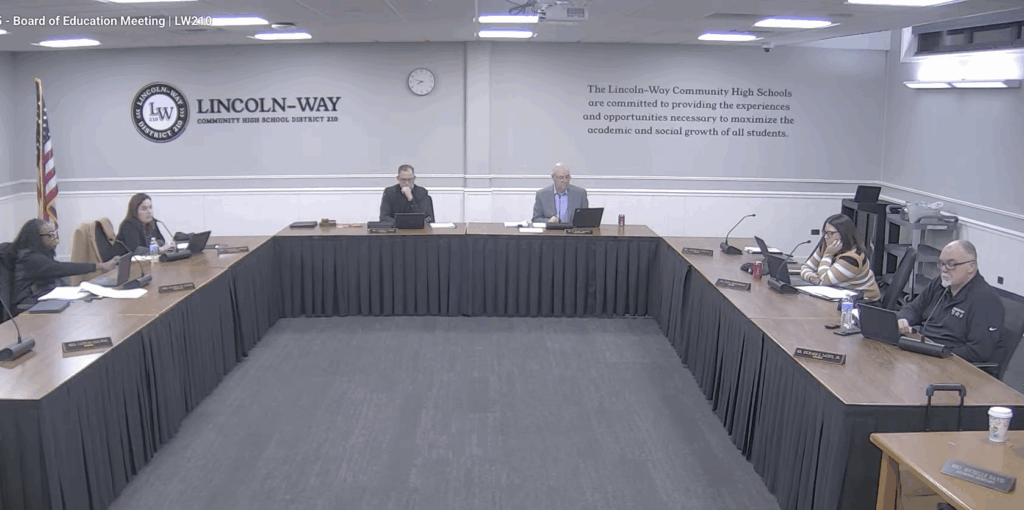
Lincoln-Way Board Approves Tutoring Service for Hospitalized Students

First Look at Lincoln-Way 210’s Proposed 2026-2027 School Calendar

Mokena Buried Under 12.7 Inches of Snow; Sub-Zero Cold Snap Approaching Friday