Louisiana: Voting Rights Act ‘balkanizes’ competing racial factions
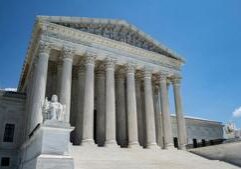
Louisiana will argue on Wednesday at the U.S. Supreme Court that part of the Voting Rights Act is “is inconsistent with the letter and spirit of the Constitution.”
Though the arguments are the crescendo of a years long legal battle within the state, they could also settle an even longer battle on how to interpret the Voting Rights Act in accordance with the 14th and 15th Amendments to the U.S. Constitution.
Louisiana took a sharp left turn the other week after the Supreme Court remitted the case back to the states to decide on a new question: whether “the State’s intentional creation of a second majority-minority congressional district violates the Fourteenth or Fifteenth Amendments to the U.S. Constitution.”
The question hinges on a congressional district map drawn in 2022, which decides which people will vote in which races for the U.S House of Representatives. That map was drawn with two districts where Blacks in the districts outnumbered any other race.
These majority Black districts were created intentionally. These two districts were originally being defended by the state. Now, they are not.
When the federal courts “forced us to draw a new majority-minority district, we did so under protest and defended it because the Supreme Court’s backwards precedents permit that district,” state Attorney General Liz Murrill wrote in a statement.
Murrill thanked the Supreme Court for sending her on a road less traveled to decide “whether this entire system is constitutional.”
“My answer: it is not,” Murill continued. “Our Constitution sees neither Black voters nor white voters; it sees only American voters.”
Originally, Louisiana was going to argue what it had been doing since the case began: that the congressional map drawn by the state was legal and should be upheld.
But with the case kicked back by the highest court, the state is arguing something radically different that has transformed the case from a familiar dispute seen before to one of major historical significance.
Now, the state will challenge Section 2 of the Voting Rights Act, arguing that its race-conscious provisions “cannot be justified by current needs.”
Louisiana contends that Section 2’s framework for ensuring minority voting power has evolved into “discrimination’s main source and aggravator,” rather than a remedy for it.
The state argues that Congress has failed to show any present-day justification for maintaining what it calls an “extraordinary remedy” that forces states into “presumptively unconstitutional race-based districting.”
Louisiana’s filing urges the justices to apply strict scrutiny – the highest level of judicial review – to Section 2 and to strike it down as incongruent with the 14th and 15th Amendments. The brief claims that Section 2 “imposes race-based remedies without the requisite showing of need” and that the Voting Rights Act has come to “balkanize us into competing racial factions.”
The plaintiffs who originally sued Louisiana – the Robinson appellants – told the curt in their filing that such a move would “upend nearly 150 years of precedent.” Their brief, led by the NAACP Legal Defense Fund and ACLU, defends Section 2 as “a permanent, nationwide ban on racial discrimination in voting,” enacted under Congress’ broad enforcement powers following the Reconstruction Amendments.
“Racial discrimination and racially polarized voting are not ancient history,” the brief says, citing the continued effects of racial bloc voting and modern efforts to dilute Black political power in Louisiana and elsewhere. “Section 2 did not create this problem; to the contrary, Congress enacted it to hasten the waning of racism in American politics.”
The Robinson appellants warn that overturning Section 2 would “strip it of its foundational context” and erase decades of precedent in which courts found that discrimination in redistricting persists.
“The history of constitutional violations supporting Section 2’s enactment is massive and well-documented,” they wrote, pointing to a century of discriminatory tactics in Louisiana – from poll taxes to gerrymanders that “sliced” Black communities to weaken their voting strength. “Even now, it appears that Louisiana is planning to roll back Black representation in its congressional delegation.”
If the Supreme Court rules in favor of the state, a new map will have to be drawn – one that is not bound by Section 2 of the Voting Rights Act.
Community Events
Latest News Stories

WATCH: UW-authored study on surgery times contradicts CMS basis for reimbursement cuts
State defends gun ban district court ruled unconstitutional

Trump aiming for ceasefire, world awaiting news from Putin summit
Pritzker acts upon 269 bills, vetoes 2, signs ‘lawsuit inferno’ measure

Report: average American to receive $3,752 tax cut in 2026 due to OBBBA

Republican, Dem work to prevent deportation of entrepreneur
Nevada superintendent says ICE won’t enter schools
Will County Updates Solid Waste Ordinance, Increases Fines and Reporting to Landfill Committee
Citing Liability Concerns, Will County Committee Postpones Vote on Septic System Ordinance
Will County Moves to Repeal Obsolete 1972 Fire Hydrant Ordinance
MAHA-style bill would close food additive safety loophole
Will County Board Gets Back to Basics with Robert’s Rules of Order Training