Trump’s plan to re-start nuclear weapons testing faces criticism
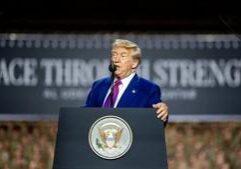
President Donald Trump’s plan to restart testing of nuclear weapons drew concern from some foreign nations, disarmament groups and Democrats.
Trump broke with decades of U.S. policy and international nuclear testing ban treaties this week with an order for the U.S. Department of War to immediately begin testing U.S. weapons.
The Arms Control Association, a nonpartisan Washington, D.C. membership group, said Trump’s proposal wasn’t realistic.
“Trump appears to be misinformed and out of touch,” ACA Executive Director Daryl Kimball said in a statement. “It would take, at least, 36 months to resume contained nuclear testing underground at the former Nevada Nuclear Test Site outside Las Vegas.”
The U.S. stopped full-scale nuclear testing in the 1990s, with the last underground test at the Nevada Test Site in 1992.
“Because of other countries testing programs, I have instructed the Department of War to start testing our Nuclear Weapons on an equal basis,” the president wrote in a social media post on Wednesday. “That process will begin immediately.”
The U.S. president later said he supports denuclearization, but also said “if they’re going to test I guess we have to test” on his return from a multi-day trip to meet with foreign leaders in Asia, including President Xi Jinping of the People’s Republic of China.
The International Campaign to Abolish Nuclear Weapons noted Russia and China have ceased nuclear testing.
“This is an unnecessary and reckless nuclear escalation, increasing nuclear dangers, and disregarding the decades of harm already caused in 80 years of nuclear age,” the group said in a post on X. “Given that neither China nor Russia is currently testing nuclear weapons, just their delivery systems, it is not clear what President Trump intends.”
North Korea is the only nation that has conducted a nuclear test in this century.
House Minority Leader Hakeem Jeffries, D-N.Y., said the move would be a violation of international law.
“It appears the resumption of nuclear testing would be a massive breach of international treaties that have been in place for decades,” Jeffries told reporters on Thursday.
China’s Foreign Minister Guo Jiakun urged the U.S. to abide by international treaties.
“China hopes that the U.S. will earnestly abide by its obligations under the Comprehensive Nuclear-Test-Ban Treaty and its commitment to a ‘moratorium on nuclear testing,’ and take concrete actions to uphold the international nuclear disarmament and non-proliferation regime, as well as global strategic balance and stability,” he told reporters at a news conference on Thursday.
The Nuclear Threat Initiative estimated a single nuclear test could cost taxpayers about $140 million, NPR reported.
Maintaining the U.S. nuclear stockpile is expected to cost nearly $1 trillion over the next decade. The Department of War’s and the Department of Energy’s plans to operate, sustain, and modernize existing nuclear forces and buy new weapons are estimated to cost $946 billion over the 2025–2034 period, or an average of about $95 billion a year, the Congressional Budget Office estimated in a report in April.
President George H.W. Bush began a unilateral testing ban in 1992. President Bill Clinton signed the Comprehensive Nuclear Test Ban Treaty in 1996. Since then, the U.S. has conducted subcritical experiments to maintain the safety and reliability of the world’s largest nuclear stockpile, according to the Department of Energy’s National Nuclear Security Administration.


Sunny
Latest News Stories

Costar shareholders re-elect directors, resist external pressure

Trump accuses Iran of violating ceasefire after drone attack on cargo ship
Legislature takes more measures against firms opposing redomiciling in Texas

Mistrial declared in federal Palisades Fire arson case
Ex-cops blast Chicago mayor’s new agency

Illinois Quick Hits: Chicago reports increased visitor spending
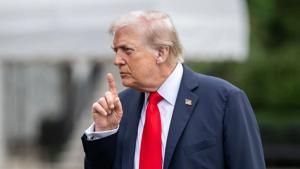
Poll: Voters give Trump worse marks on economy than job overall
Two Democrats seek GOP congressman’s seat in Colorado

WATCH: Report says more U.S. families are saving for college
Illinois to see 4 new consumer protection laws enacted

EXCLUSIVE: Report warns about costly regulations’ impact on short-term rentals
One in five calls answered on IRS identity theft line, watchdog says