Illinois soybean farmers face uncertainty amid MAHA push against seed oils
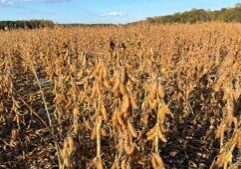
Illinois soybean farmers face a potential market shakeup if public sentiment, and eventually policy, turns against seed oils, experts warn.
Robert F. Kennedy Jr., now Trump’s Health and Human Services secretary, has been outspoken about reshaping America’s diet, saying in a video that Trump has promised him “control of the public health agencies.”
“We’ve got to get off of seed oils and we’ve got to get off of pesticide-intense agriculture,” said Kennedy in the video.
Kennedy’s remarks are raising concern among agricultural experts, including Callie Eideberg, principal at the Vogel Group, who notes that about two-thirds of the U.S. soybean market goes into food, meaning any shift away from seed oils could hit Illinois farmers hard.
“We haven’t seen the federal government take any legal or regulatory steps to remove soybean oil or other seed oils from the food system,” Eideberg said. “That could change, but without a legal mandate, it’s unlikely many companies will voluntarily reformulate their products—it’s simply too costly. For now, the real impact on farmers’ bottom lines remains to be seen.”
Eideberg noted producers should start paying attention as food trends and policy debates converge.
Eideberg was asked whether Illinois soybean farmers might need to adapt their operations, or even switch to a different crop, to respond to changing consumer trends and potential regulatory pressures.
“I know there are folks at the Illinois Soybean Association and across the country who are always thinking about new market development,” Eideberg said. “Whether that’s finding a place to sell soybeans overseas for animal feed or human consumption, or creating innovative products, experts are figuring that out every day. Soy is everywhere – even in car seats – but there’s still a lot more that can be done to expand alternative uses beyond the consumer market.”
For now, she said trade policy remains the bigger problem. Eideberg said the “lack of markets overseas” tied to ongoing trade wars is having “the biggest impact right now on the bottom line for soybean producers.”
Illinois recently banned certain food dyes, a MAHA-related move. Eideberg warns that if states target soybean oil next, it could create a patchwork of rules that would be challenging for both farmers and food producers.
“Individual states are making these MAHA-related decisions on their own,” she said. “When the federal government tried to remove certain food dyes from our system, it wasn’t a legal mandate, it was more of a strong-arm effort by Secretary Kennedy. Companies complied because those products weren’t widely used. Soybean oil is very different; it’s in nearly everything consumers buy, so removing it would be a massive, costly undertaking.”
The bigger issue, Eideberg said, is what happens when individual states start passing their own MAHA-related laws.
“That becomes a nightmare for companies who are trying to sell their products in all 50 states but potentially need 50 different formulations for those products,” she said.
To counter this, a coalition of food companies in Washington D.C. has formed to push for federal preemption, where the federal government asserts sole authority over food regulation, preventing states from setting conflicting rules.
“There’s a lot of money behind this effort,” Eideberg said. “It’s just getting started, and it’s going to take a little while. But this could be a way to make federal law the standard, so states no longer have the authority to act independently.”






Mostly Sunny then Showers And Thunderstorms Likely
Latest News Stories
Federal Funding Freezes Threaten Will County Public Health Programs Amid Ongoing Lawsuits
Board Splits Along Party Lines to Approve 2026 Federal Legislative Agenda
Meeting Summary and Briefs: Will County Landfill Committee for February 10, 2026
Meeting Summary and Briefs: Will County Board for February 19, 2026
Board Approves Joliet Township Clean Fill Facility Despite Environmental Objections

Will County Board Unanimously Rejects Controversial Solar Farm in Troy Township
Committee Approves $740,000 Compressor to Boost RNG Plant Uptime
Meeting Summary and Briefs: Lincoln-Way District 210 Board of Education for February 19, 2026
County Approves $1.9 Million for Wilmington-Peotone Road Engineering

County Board Authorizes Audit of Homer Glen Policing Contract; Officials Seek ‘True Cost’ of Services
Soltage Drops Battery Storage Plans, Secures Extensions for Two Crete Solar Projects
Scrap Metal Drop-Off Near Mokena Approved by Single Vote
Landscape Business Approved on Cedar Road Despite ‘Dangerous Curve’ Concerns
Meeting Summary and Briefs: Mokena School District 159 for February 18, 2026