
Government shutdown to surpass 35 days, breaking all records
For the 14th time, U.S. Senate Democrats on Tuesday filibustered Republicans’ funding bill to reopen the government, guaranteeing that the ongoing shutdown, now on its 35th day, will be the longest in U.S. history.
The government has remained closed since Oct. 1, after Democratic senators first blocked the House-passed Continuing Resolution that would have extended federal funding until mid-November.
Democrats will not provide the necessary votes for any funding deal unless Republicans promise to make permanent the pandemic-era expansion of the Obamacare Premium Tax Credit. Because such a proposal would cost at least $350 billion and fail to address underlying health care policy issues, Republican leaders have refused.
In the meantime, dozens of critical federal services have halted, including the distribution of farm aid, small business and home loans, and SNAP benefits for 42 million low-income Americans.
Hundreds of thousands of government workers are on unpaid furlough, and tens of thousands more, including federal police and air traffic controllers, are forced to work without pay.
“For a party that claims to represent working people, it is striking to me how very little Democrats seem to care about working people during this shutdown,” Senate Majority Leader John Thune, R-S.D., said Tuesday.
With more than half of the seven weeks originally covered by the CR wasted in a shutdown, Republican leaders appear resigned to the fact that they must draft a new funding stopgap and extend the funding date.
This introduces a new host of problems for the party, though, because Republicans disagree on how long the new funding patch should last.
Before the shutdown, the government was already running off of appropriations levels from fiscal year 2024. Congress never passed a real budget last year, instead punting forward the shutdown deadline via three consecutive CRs.
So while Republicans don’t want to see funding levels from the Biden administration remain any longer than necessary, many are also concerned that a funding stopgap ending in December will turn into a “Christmas Cramnibus” filled with last-minute earmarks.
“Any new continuing resolution must extend past January 15 to avoid a Christmas omnibus loaded with earmarks,” Sen. Rick Scott, R-Fla., said on X. “My friends in the House want to extend a CR at least until March 31. Any spending bills we eventually pass should be closely aligned with the president’s proposed budget to deliver for the American people and bring fiscal sanity back to the nation.”






Showers And Thunderstorms Likely
Latest News Stories

Meeting Summary and Briefs: Joliet Junior College Board of Trustees for March 11, 2026

IL Supreme Court says it can remove Cook Co. judge for pro-Trump column

FBI: Illinois’ cyber crime losses reached $535M in 2025
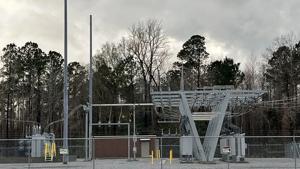
Minnesota, Illinois AGs challenge federal orders to keep coal plants running

FBI finds Americans lose billions to cryptocurrency scams

Illinois lawmakers seek to regulate, tax prediction markets amid federal lawsuit

Report: Teacher’s union gives nearly 2M to org that trains for May Day protests

Illinois Quick Hits: Downtown Chicago office vacancies hit another record high

Trump issues dire warning to Iran as deadline looms

Report: Iran, inflation concern small businesses

U.S.-Israel-Iranian conflict escalating global energy, supply chain crisis

Meeting Summary and Briefs: Will County Board Land Use & Development Committee for March 26, 2026