Government shutdown to surpass 35 days, breaking all records
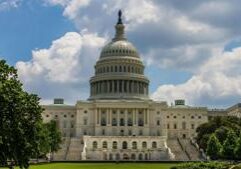
For the 14th time, U.S. Senate Democrats on Tuesday filibustered Republicans’ funding bill to reopen the government, guaranteeing that the ongoing shutdown, now on its 35th day, will be the longest in U.S. history.
The government has remained closed since Oct. 1, after Democratic senators first blocked the House-passed Continuing Resolution that would have extended federal funding until mid-November.
Democrats will not provide the necessary votes for any funding deal unless Republicans promise to make permanent the pandemic-era expansion of the Obamacare Premium Tax Credit. Because such a proposal would cost at least $350 billion and fail to address underlying health care policy issues, Republican leaders have refused.
In the meantime, dozens of critical federal services have halted, including the distribution of farm aid, small business and home loans, and SNAP benefits for 42 million low-income Americans.
Hundreds of thousands of government workers are on unpaid furlough, and tens of thousands more, including federal police and air traffic controllers, are forced to work without pay.
“For a party that claims to represent working people, it is striking to me how very little Democrats seem to care about working people during this shutdown,” Senate Majority Leader John Thune, R-S.D., said Tuesday.
With more than half of the seven weeks originally covered by the CR wasted in a shutdown, Republican leaders appear resigned to the fact that they must draft a new funding stopgap and extend the funding date.
This introduces a new host of problems for the party, though, because Republicans disagree on how long the new funding patch should last.
Before the shutdown, the government was already running off of appropriations levels from fiscal year 2024. Congress never passed a real budget last year, instead punting forward the shutdown deadline via three consecutive CRs.
So while Republicans don’t want to see funding levels from the Biden administration remain any longer than necessary, many are also concerned that a funding stopgap ending in December will turn into a “Christmas Cramnibus” filled with last-minute earmarks.
“Any new continuing resolution must extend past January 15 to avoid a Christmas omnibus loaded with earmarks,” Sen. Rick Scott, R-Fla., said on X. “My friends in the House want to extend a CR at least until March 31. Any spending bills we eventually pass should be closely aligned with the president’s proposed budget to deliver for the American people and bring fiscal sanity back to the nation.”






Showers And Thunderstorms Likely then Mostly Cloudy
Latest News Stories
Landfill Committee Advances Plan to Purchase Fourth Compressor for RNG Plant

Fifth Graders Honored for DARE Essays on Decision Making
Ad-Hoc Committee Retains Noise Ordinance Despite Enforcement Frustrations
Will County Commits $15M to Transfer Sanitary District Operations to City of Joliet

Meeting Summary and Briefs: Lincoln-Way 210 Board of Education for Jan. 15, 2026

Board Approves Window Blind Contract and Financial Abatement for IMRF

Prairie View Landfill Expansion Plans Take Shape as Consultants Navigate Design Challenges

County Committee Proposes Federal Study on “Legacy Pollution” Near Joliet and Romeoville Refineries

Meeting Summary and Briefs: Mokena Fire Protection District for December 9, 2025

Mokena Board Hires Project Engineer to Fill Department Vacancy
Board Member Pushes for Increased Transparency on Minutes, Policy Implementation
County Authorizes Condemnation to Advance Francis and Marley Road Improvements