Report: Hegseth violated multiple protocols and federal law in ‘Signalgate’
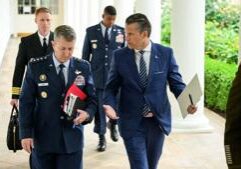
Secretary of War Pete Hegseth violated multiple protocols and federal law in the “Signalgate” affair in March, according to Pentagon watchdog the Office of Inspector General of the Department of Defense.
In a report commissioned by Congress, the office concluded that Hegseth stepped outside his authority as war secretary when he used his personal phone and an unapproved commercial messaging app to communicate attack plans with other government officials; he also didn’t keep a record of all of the chat’s messaging, some of which auto-deleted after a set time, violating both federal law and department policy. Finally, putting the information in the Signal group chat posed additional threats to American forces and missions, according to the office.
Though Hegseth as war secretary does have the authority to determine the classification level of any information he shares (how sensitive the information is), the report affirmed, the methods of communication are a separate matter governed by federal cybersecurity, recordkeeping and communications rules.
In March, Hegseth sent a “team update” to a Signal group chat with 18 other government officials, listing the planned times and assets to be used in strikes against the Yemeni Houthi rebel group later that day.
F-18s would launch at 12:15 Eastern time, and their first strike window would start at 1:45 PM.
“Target Terrorist is @ his Known Location so SHOULD BE ON TIME,” Hegseth noted.
He went on to include launch and strike times for the second group of F-18s, when the first bombs would “definitely drop” and when sea-based Tomahawks would be launched.
Hegseth has described this information as an “unclassified summary” of “non-specific, general details” that wouldn’t endanger anyone or anything on their own.
“There was nothing classified in this text. There were no locations or targets identified. There were no details that would endanger our troops or the mission. The details which were included would be useless without also knowing the undisclosed details,” Hegseth wrote in a statement to the office in July.
But the office disagreed, instead describing the texted information as “sensitive, nonpublic, operational information” that the War Department prohibits from being sent on a personal device or an unapproved messaging app like Signal, even though it is encrypted.
The office also determined that the Houthis could have acted preemptively based on the information in the messaging thread.
“If this information had fallen into the hands of U.S. adversaries, Houthi forces might have been able to counter U.S. forces or reposition personnel and assets to avoid planned U.S. strikes,” the report reads. “Even though these events did not ultimately occur, the Secretary’s actions created a risk to operational security that could have resulted in failed U.S. mission objectives and potential harm to U.S. pilots.”
Despite its conclusions, the office did not make recommendations about the use of commercially available messaging apps like Signal in its report because the event was “only one instance of a larger, DoD-wide issue.” Instead, it recommended in another report that “the DoD improve training for senior DoD officials on the proper use of electronic devices.”






Mostly Sunny then Slight Chance Showers And Thunderstorms
Latest News Stories
‘The Art of the Heal’: How TrumpRx, most-favored nation pricing, Big Pharma intersect

GOP stands up for U.S. military strikes on suspected drug boats
IL lawmakers could address energy prices, transit, taxes during veto session
Committee Advances 50% Increase in Mental Health Levy on 4-3 Vote
Will County Poised to Launch Major Mental Health Initiative Based on Joliet Program’s Success
Looming State Energy Bill Threatens to Further Limit County Control Over Solar and Wind Projects
Controversial Immigrant Rights Resolution Postponed by Will County Board After Heated Debate
Trump says US troops will get paid Oct. 15 despite funding lapse

$4.5B awarded in new contracts to build Smart Wall along southwest border

Do No Harm expects FTC to take action to protect minors from transgender procedures
2024 was deadliest year for journalists on record
Govt shutdown raises concerns over national security