WATCH: Pritzker: ‘No’ to state taxpayer-funded guaranteed income
(The Center Square) – Gov. J.B. Pritzker says he is not planning to follow Cook County by implementing a guaranteed income program, and one Statehouse Democrat wants to prevent government units from funding such programs with taxpayer dollars.
Cook County’s $10.12 billion budget for fiscal year 2026 includes $7.5 million for guaranteed income recipients. The county’s Board of Commissioners unanimously approved the spending plan Nov. 20.
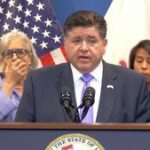
Pritzker was asked in Chicago Wednesday if he was considering the use of state taxpayer dollars for guaranteed income.
“No,” the governor responded.
When asked for his thoughts about Cook County’s program, he said it was not inappropriate for counties and municipalities to try things.
“It’s not a policy that we’re looking at doing for the state of Illinois but, on the other hand, sometimes things that you don’t imagine would work do,” Pritzker said.
The governor said it was important to make sure people have the basics they need in life.
“I am concerned, I think that we should be providing jobs for people so they can earn a good living, and the dignity of work really matters,” Pritzker said.
Last April, Cook County Board President Toni Preckwinkle said the county’s guaranteed income pilot program was successful and announced the formation of a committee to guide the next phase.
The pilot program used $42 million in federal American Rescue Plan Act funds to give monthly $500 payments to 3,250 families.
Last December, state Rep. Anthony DeLuca, D-Chicago Heights, proposed the Prohibition on Taxpayer Funding of Guaranteed Income Act. The measure was referred to the General Assembly’s Rules Committee on Jan. 9, 2025.
DeLuca said House Bill 60 would prohibit units of government from using taxpayer money to fund guaranteed income programs.
“What the bill does, it doesn’t say you cannot have a guaranteed income program. You can have a guaranteed income program, you just can’t use the taxpayer dollars to do so,” DeLuca told The Center Square.
DeLuca said, under his legislation, government units could still manage guaranteed income programs if the funding came from another source.
“And it gets back to the same issue about managing tax dollars. People are paying a lot of money in property taxes, certainly in my area,” DeLuca explained. “Affordability is a huge issue. They feel like they’re getting nickel-and-dimed by government at all levels.”
Republican gubernatorial candidate Ted Dabrowski called Cook County’s decision to continue its guaranteed income program “a prime example of recklessly misguided welfare.”
Dabrowski issued a statement saying the Pritzker administration helped make Cook County’s move possible, noting the county’s program contained no work requirement for able-bodied people and no citizenship requirement.
“Normalizing government dependency, as Cook County’s program clearly seeks to do, is destructive at a time when Illinoisans, especially in Cook County, are already reeling from huge tax increases,” Dabrowski concluded.
Greg Bishop contributed to this story.

Rain Showers Likely then Partly Sunny
Latest News Stories
USDOT puts $2.1 billion of taxpayer funds for CTA under review

No UPCODE Act could be part of shutdown solution … and more
Health care policy remains sticking point in Senate’s govt shutdown talks

ICE arrests 9 Chileans linked to South American theft group operating in NJ
WATCH: State police prepares ICE protest zones; energy policy debate continues
DHS blames ‘sanctuary’ politicians for ICE violence
Illinois news in brief: Department of Transportation reviews CTA spending plans; Illinois manufacturers kick off ‘Makers on the Move’ tour; Hearings continue on energy legislation
Meeting Summary and Briefs: Will County Board for September 18, 2025
Meeting Summary and Briefs: Frankfort Township Board for August 11, 2025
Illinois quick hits: Transit cliff revision criticized; Pike County shooting investigation

Pritzker open to spending on Bears infrastructure, concerns remain about debt
IL legislators weigh energy policy some say will increase costs
Analyst points to inefficiencies as Pritzker touts record spending on infrastructure