Report: Coordinated resilience infrastructure is needed in age of AI
Highly coordinated resilience infrastructure is needed in the age of artificial intelligence, says a new report released Thursday from the Elon University Imagining the Digital Future Center.
A survey found 82% believing artificial intelligence will play “a significantly larger role in shaping people’s lives and key societal functions in the next 10 years or less.” The resilience infrastructure is to “counterbalance the human and systemic challenges posed by widespread AI adoption.”
Authored by Janna Anderson and Lee Rainie, the nonscientific canvass was conducted between Dec. 26 and Feb. 12. More than 4,000 experts were invited to respond, drawing 386 responses to at least one aspect and 251 responses to open-ended questions.
“The central risk described by these experts is not a single catastrophic AI event,” said Anderson, professor of communications and senior researcher for the center. “They said accelerated AI use will lead to a cumulative reallocation of human agency until people and institutions find it harder to question, contest or even notice what has changed. That drift can look like ‘progress’ in the short term, but it has a price – the gradual weakening of human judgment, accountability, shared truth and the social fabric that makes self-government possible.”
Among the findings, only 13% said the level change is 20 to 30 years away. In decisions guided by artificial intelligence, “56% said that the time they expect AI will be significantly more advanced it will influence, guide or control ‘nearly all’ or ‘most’ human activities and decisions.” Another 24% said it would influence, guide or control nearly half.
Mel Sellick, founder of the Future Human Lab, said, “AI has become the infrastructure through which all relating now happens. Even when we think we are not using AI directly, we are constantly interacting with what AI has already touched. There is no ‘outside’ anymore. Some form of AI is upstream of everything. We are the last generation that knows what human capacity felt like before it became inseparable from AI.”
The report also found only 33% saying people “will be more satisfied than dissatisfied with AI systems at that time; 31% said people will be more dissatisfied than satisfied; 33% said people will have an equal amount of satisfaction and dissatisfaction with AI systems.”
Other findings include worries about the loss of human agency; epistemic fragmentation and collapse of shared reality; need for “existential literacy”; the “work quake,” meaning an economic threat and identity upheaval; new divisions and inequities; automated complacency; change in social interaction; and complications when nonhuman actors move into human spaces.






Showers And Thunderstorms then Mostly Cloudy
Latest News Stories

Will County Committee Grapples with $8.9 Million Budget Gap After Contentious 0% Tax Levy Vote


Meeting Summary and Briefs: Mokena School District 159 Board of Education for October 15, 2025

Meeting Summary and Briefs: Frankfort Township Board for September 8, 2025
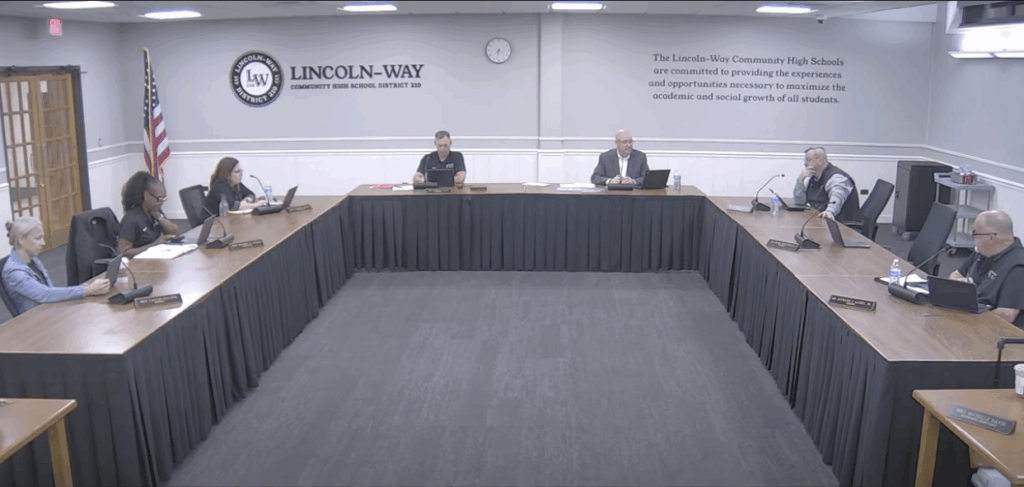
Lincoln-Way to Purchase New Buses, Add Smaller Vehicles to Address Driver Shortage
Mokena 159 Board Adopts New Policies on AI, Student Support Despite Dissent

Lincoln-Way Board Honors Students with Perfect ACT Scores, Music Educator of the Year

Frankfort Township Board Denies Permit for New Bar on St. Francis Road

Mokena 159 Receives Clean Audit Report, Earns State’s Highest Financial Recognition

Meeting Summary and Briefs: Mokena Village Board for September 22, 2025

Lincoln-Way Support Staff Union Rejects Tentative Contract Agreement

Mokena to Replace Invasive Callery Pear Trees with Grant Funding