Illinois millionaire’s tax moves closer to November ballot
(The Center Square) – A measure giving Illinois voters the opportunity to consider a millionaire’s tax is one step closer to the November ballot.
House Joint Resolution Constitutional Amendment 21 would raise the tax rate on income more than $1 million from 4.95% to 7.95%.
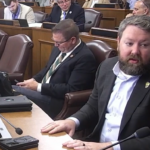
State Rep. La Shawn Ford, D-Chicago, argued in favor of his resolution before the House Revenue and Finance Committee late Tuesday afternoon.
“This will make Illinois schools better. It will make Illinois stronger by making sure that we can invest in our schools and provide property tax relief to families,” Ford said.
Half the revenue collected from the millionaire’s tax would be used for property tax relief. The other half would go to public school districts on a per-pupil basis.
Illinois Commission on Government Forecasting and Accountability data based on 2023 tax returns suggested that the millionaire’s tax would have generated $2.2 billion in revenue.
Taxpayers’ Federation of Illinois President Maurice Scholten said his organization does not oppose a graduated income tax, but it does oppose having a dollar amount in the state constitution.
“So it’ll be $1 million this year, next year, every year, and in 2045, 2065, more and more taxpayers will be hit by that. If the General Assembly feels that the right amount is $1 million, that should be indexed to inflation somehow,” Scholten said.
Scholten also said small business owners who sell could be hit by a “one-time income event.”
State Rep. Amy Elik, R-Alton, asked Ford how the tax would apply to couples.
“So you’re saying joint filers $1 million plus, so in that situation maybe they would file married filing separately to avoid the 3%?” Elik said.
“To maintain under the threshold, yes,” Ford said.
When state Rep. Kyle Moore, R-Quincy, asked why the resolution language did not specify how revenue from the tax would be distributed, Ford admitted there were no plans for allocation but the General Assembly would have that responsibility after voters approve the amendment.
“We don’t give our taxpayers, we don’t give the people of Illinois the credit that they deserve by thinking that they’re just dumb enough to think that this money’s going to be used for the proper purpose. It’s not, you know that,” state Rep. Steven Reick, R-Woodstock, said.
Ford suggested that he could work with Reick to put a lockbox in place to make sure the funds would be used appropriately.
The amendment passed out of committee with a partisan vote of 13-7 and now heads to the House floor.
If three fifths of the General Assembly approves HJRCA 21 by May 3, voters will decide the amendment’s fate Nov. 3.



Mostly Clear
Latest News Stories

Illinois Quick Hits: IDOT says all 102 counties to have transit

Poll: Taxes, economy top voter concerns

Murphy, Dhillon go to bat for players in baseball’s Pride Night black eye
Republicans compete to face Neguse in congressional race

Vance says ‘progress’ made in talks with Iran

Report: Eight Michigan counties among most vulnerable to Social Security cuts

Illinois Quick Hits: Tornado kills 2 in Jefferson County
‘Half-baked’ Illinois social media tax poised to tee up court challenges

DHS thwarts Iranian terrorist threats at the northern border, World Cup ties

Everyday Economics: A new chair, a shorter statement, a Fed that stopped talking cuts

Illinois congressmen worry as DHS Secretary seeks to ‘protect election integrity’

Poll: 70% of Americans ‘concerned’ AI will take jobs