Report: $186 billion in federal payment errors likely an undercount
Federal agencies made an estimated $186 billion in improper payments in fiscal year 2025, a $24 billion increase from the prior year, according to a new Government Accountability Office report released Monday.
The $186 billion in estimated improper payments is enough to fund the federal government’s entire Supplemental Nutrition Assistance Program, which served an average of 41.7 million participants per month in fiscal year 2024, for nearly two years. SNAP provides food benefits to low-income families to supplement their grocery budget.
The increase marks a reversal after a sharp decline the previous year and pushes the government’s cumulative improper payment total since fiscal year 2003 to roughly $3 trillion. Improper payments are those that should not have been made or were made in the incorrect amount.
“Federal agencies must do more to protect taxpayer dollars from the errors that drive improper payments,” said Orice W. Brown, acting comptroller general of the United States. “This $186 billion problem demands urgent action – agencies need stronger controls, better data, a commitment to accountability, as well as robust Congressional oversight.”
The $186 billion is likely an undercount. The GAO report noted that the federal government remains unable to determine the full extent of its improper payments, a finding it has made every year since 1997.
Overpayments, those exceeding the amount owed, accounted for $153 billion, or about 82%, of the total. The remainder included $14.3 billion in unknown payments, $10 billion in underpayments and $8.4 billion in technically improper payments.
The offices of Sens. Rand Paul, R-Ky., and Gary Peters, D-Mich., and Reps. James Comer, R-Ky., and Robert Garcia, D-Calif., did not respond to questions about improper payments from The Center Square.
Five programs drive nearly three-quarters of the total
Fifteen agencies reported improper payment estimates across 64 federal programs. About 73% of the government-wide total, about $136 billion, was concentrated in just five program areas: Medicare, comprising three programs ($57 billion); Medicaid ($37 billion); the Department of the Treasury’s Earned Income Tax Credit ($21 billion); the Department of Agriculture’s Supplemental Nutrition Assistance Program ($10 billion); and the Small Business Administration’s Shuttered Venue Operators Grant program ($10 billion).
Nineteen programs reported improper payment rates above 10%, and six reported rates above 25%. The Shuttered Venue Operators Grant program, which provided emergency assistance to live venue operators affected by the COVID-19 pandemic, reported the highest error rate at 68.9%. The Farm Service Agency’s Emergency Conservation Program came in at 55.5%. The Earned Income Tax Credit, a refundable federal tax credit for low- to moderate-income workers, reported a 32.7% error rate.
The $24 billion jump from fiscal year 2024 is largely attributable to programs reporting estimates for the first time. The Shuttered Venue Operators Grant program alone accounted for $10.1 billion of the increase. Fiscal year 2025 was the first year SBA reported improper payment estimates for the program. Congress created the Shuttered Venue Operators Grant program in response to the COVID-19 pandemic. The program included more than $16 billion in grants to shuttered venues, according to the Small Business Administration.
Medicaid contributed another $6.3 billion to the increase. The Department of Health and Human Services attributed the rise to increased errors in eligibility redeterminations and provider screening as pandemic-era flexibilities in the program were phased out.
The Earned Income Tax Credit jumped by $5.2 billion. The Department of the Treasury provided no explanation for the increase.
Not all the news was bad. Medicare Fee-for-Service reported a $2.9 billion decline in improper payments, which HHS attributed to enhanced internal controls related to prior authorizations.
Compliance remains a chronic problem
Twelve of the 24 major federal agencies covered by the Chief Financial Officers Act of 1990 fully complied with federal payment integrity law in fiscal year 2024, down from 13 the prior year. Thirteen agencies received a combined 61 recommendations from their inspectors general, 20 of which were repeated from prior years.
Noncompliant agencies included the Departments of Agriculture, Defense, Health and Human Services, Housing and Urban Development, Labor, Treasury, Veterans Affairs, the Environmental Protection Agency, the Office of Personnel Management, the Small Business Administration, the Social Security Administration, and the U.S. Agency for International Development.
The most common compliance failure: Nine of 14 agencies for which the criterion applied had at least one program reporting an improper payment rate above 10%, the threshold agencies must stay under to be considered compliant.
The full extent remains unknown
The GAO report warned that the $186 billion total does not capture the full scope of government-wide improper payments. Several programs determined to be susceptible to significant payment errors were not included in the estimate.
Among the most notable omissions: the Temporary Assistance for Needy Families program, which spent about $16.5 billion in fiscal year 2025. HHS does not calculate or report improper payment amounts for TANF due to statutory limitations. GAO recommended in April 2022 that Congress give HHS the authority to require states to report the data needed to estimate TANF improper payments. Congress has not acted on that recommendation.
One fix, nine still waiting
Congress has acted on one of 10 recommendations the GAO made in 2022 to enhance transparency and accountability of federal spending. In February 2026, President Donald Trump signed into law the Ending Improper Payments to Deceased People Act, which makes permanent a pilot program requiring the Social Security Administration to share its Death Master File with the Treasury Department’s Do Not Pay system. The law takes effect in December 2026.
The legislation drew bipartisan support. Sen. John Kennedy, R-La., who helped lead the bill, said stopping fraudulent payments to dead people was long overdue.
“Using dead Americans to rip off taxpayers is as low as it gets,” Kennedy said. “That’s why I wrote this common-sense bill to end this outrageous abuse permanently.”
Peters, who co-sponsored the legislation, said in a February statement that the bill would help safeguard taxpayer dollars.
“This vital bill will help save millions of taxpayer dollars by ensuring the Social Security Administration will be able to permanently share important data with the Treasury Department’s Do Not Pay system, preventing wrongful payments to deceased individuals,” Peters said.
Congressional efforts to require greater transparency on improper payments have stalled. The Improper Payments Transparency Act, which would have required the president’s annual budget request to include detailed information on payment errors and corrective actions, was introduced in March 2025 but never advanced. A similar bill failed to advance in the prior Congress as well.
The other nine of GAO’s 2022 recommendations remain open, including a call to designate all new federal programs making more than $100 million in payments in any one fiscal year as susceptible to improper payments, and to establish a permanent data analytics center of excellence to help identify improper payments and fraud.
Since fiscal year 2003, improper payment estimates by executive branch agencies have totaled roughly $3 trillion. GAO has identified improper payments as a material weakness in federal financial audits every year since 1997. That’s nearly three decades without resolution.




Showers And Thunderstorms Likely
Latest News Stories
JJC Embarks on New 10-15 Year Facilities Master Plan Process
Meeting Briefs: Library Board of Trustees for June 24, 2025
Meeting Summary: Joliet Junior College Board of Trustees for June 25, 2025
Mokena Enacts Local Grocery Tax to Avert $850,000 Revenue Loss
Mokena Dissolves Two Committees to Streamline Development Process
Mokena Police to Get New Axon In-Car Cameras in $176K Deal

Mokena Targets Invasive Callery Pear Trees for Removal
Meeting Briefs: Mokena Village Board for June 23, 2025
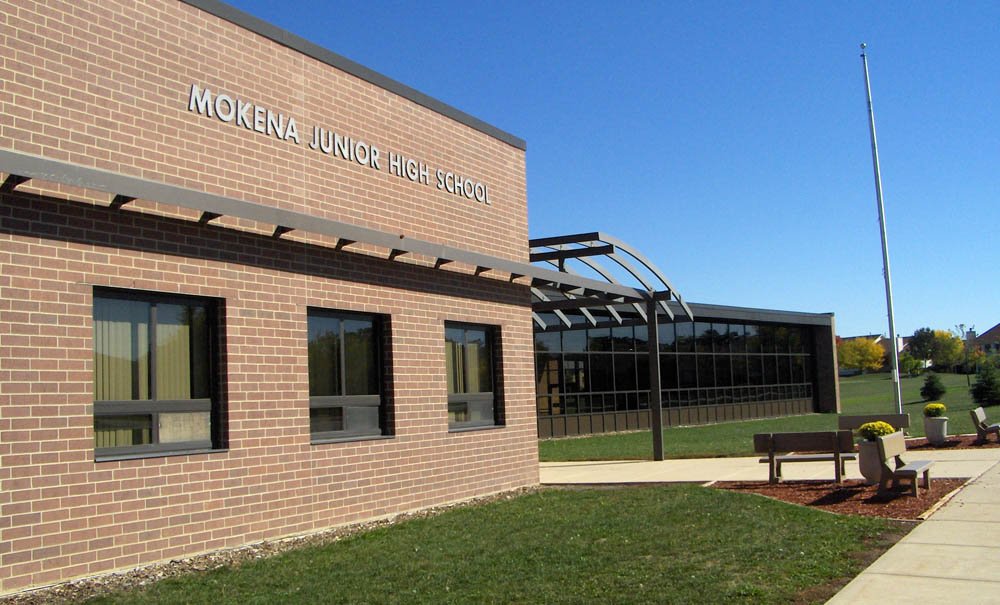
Mokena 159 Board Approves Amended Budget Amid Transparency, Deficit Concerns
Mokena 159 Board Signals Support for Recording Meetings After Public Push
District 159 Adopts ‘Wayfinder’ Program to Boost Middle Schoolers’ Social-Emotional Health
Mokena 159 Principals Report End-of-Year Academic Progress, Focus on Writing