Powell out, Warsh in as new chair of Federal Reserve
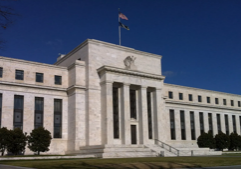
Kevin Warsh, an economist and former member of the Federal Reserve Board of Governors, is now chair of the central bank, replacing longtime chair, Jerome Powell.
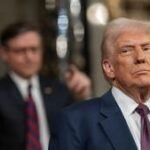
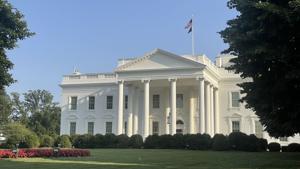
Warsh was sworn in at the White House Friday with a large crowd in attendance after completing the confirmation process.
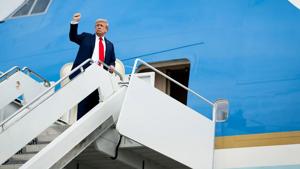
“I expect he will go down as one of the truly great chairmen of the Federal Reserve that we’ve ever had,” Trump said at the event. “I think he’s got abilities that very few people have.”
Warsh will replace Powell, after a years-long feud between the president and the now former chair.
Powell was nominated to the Fed’s board of governors by former President Barack Obama, but he was nominated to serve as the chair by Trump in 2017. But Trump often criticized Powell’s decisions as head of the Fed during his first term, and that continued into his second. Trump has publicly pressured Powell for months to lower interest rates more aggressively, saying it would supercharge the economy, while the Fed held rates steady and then began intermittently and cautiously lowering them. However, because the Fed is an independent federal institution, Trump waited until Powell’s term ended before replacing him with Warsh.
Trump said the Fed allowed political concerns to interfere with policy in recent years, leading to the inflation Americans have faced.
“In the eyes of many, the Fed lost its way in recent years … drifting into matters such as climate policy and DEI initiatives,” Trump said.
It was this “straying from its mandate while the last administration blew out the deficit” that led to “Americans [suffering] the worst inflation that we’ve had in history,” according to Trump.
The first Trump administration also added to the deficit each year it was in place, as it has in his second term. The president did not mention the COVID-19 pandemic or the federal government’s response to it.
But Trump hopes that Warsh will be more aligned with the administration’s economic vision and boost economic growth. The president has often criticized the Fed’s reluctance to aggressively lower interest rates as an encumbrance to the kind of growth he believes his administration can achieve, though rapid lowering of interest rates can foster inflation. But Trump still believes the Fed has been too cautious.
“We have some debt we’d like to take care of, and the way you do that is through growth. We’re going to grow our way out of it so fast,” Trump said. “We want to stop inflation, but we don’t want to stop greatness, and … that’s what [Kevin] is looking to do.”
After earning his undergraduate degree from Stanford University in 1992 followed by a law degree from Harvard Law School, Warsh eventually became the vice president and executive director of global investment bank Morgan Stanley.
In February 2002, he joined the National Economic Council, where he served as special assistant for economic policy to President George W. Bush. Bush later nominated Warsh for the reserve’s board of governors, where Warsh served from 2006-2011, helping craft the Fed’s response to the 2008 economic crisis.


Slight Chance Showers And Thunderstorms
Latest News Stories

IL Senate approves Department of Corrections director despite fierce opposition
Report: PJM power grid electrification faces bumpy transition
Judge orders Trump to use emergency fund to disburse SNAP benefits
Early morning vote advances Illinois’ ‘Terminally Ill Patients Act,’ sparks outcry

91% of U.S. veterans concerned about food assistance amid shutdown
Indiana state police working with ICE at Illinois border to secure interstates
Trump’s former National Security Adviser criticizes Ireland for ‘cozying up to China’
WATCH: IL lawmakers pass consequential bills early Halloween
Trump calls on Senate Republicans to nuke filibuster
FBI: ‘Potential’ Halloween terror plot foiled; multiple subjects arrested in Michigan

WATCH: Trick or treat: IL legislators pass tax increase, decoupling bill early Friday
Noem refuses Pritzker enforcement pause request, IL passes sanctuary enhancement
WATCH: Energy bill opponents say increases IL electric bills by $8 billion passes