Senate sends $70B bill funding ICE, border patrol to vacant House
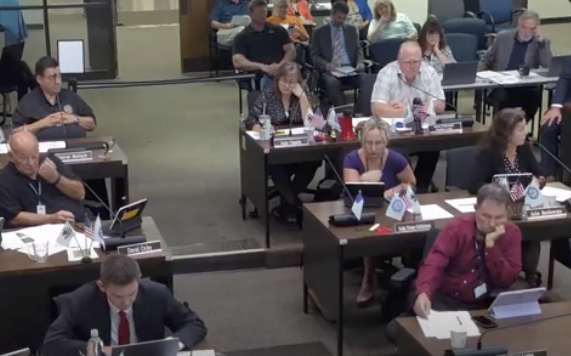
U.S. Senate Republicans finally passed their roughly $70 billion immigration enforcement funding bill after an 18-hour vote-a-rama that ended early Friday morning.
The 52-47 final vote saw every Republican holdout except Sen. Lisa Murkowski, R-Alaska, supporting party-line the bill.
The long-delayed budget reconciliation bill funds Immigration and Customs Enforcement and U.S. Border Patrol through 2029, as well as provides an additional funding boost for general homeland security operations.
Yet despite the legislation needing only House approval before it heads to the president’s desk and becomes law, the lower chamber took off Thursday night for the weekend rather than leaving Friday.
Monday evening is the earliest House lawmakers will vote on the legislation, according to the chamber clerk’s schedule.
The legislation was initially supposed to pass both chambers by June 1. But Republican infighting over certain controversial additions to the bill, which were eventually stripped, prevented timely advancement in the Senate.
Republican leaders had initially included a $1 billion earmark for the Secret Service, which would have funded “security adjustments and upgrades” to the East Wing Modernization Project, which the Trump administration is replacing with a ballroom.
After multiple Senate Republicans objected, the provision was ultimately scrapped, and passage of the bill seemed likely to occur before Memorial Day.
However, the Trump administration again complicated matters by introducing a $1.77 billion “Anti-Weaponization Fund” under the Department of Justice.
The money – sourced from Trump’s settlement with the IRS after he sued the agency for the leakage of his 2019 and 2020 tax returns – would support people claiming that the former Biden administration unfairly targeted them for political or ideological reasons.
Republicans in vulnerable states immediately demanded that the budget reconciliation bill include an amendment nullifying the fund. Senators deadlocked over the issue and left for their week-long Memorial Day recess without passing the bill.
Once a federal judge issued a temporary restraining order on the fund, the DOJ backed down, with the acting attorney general promising lawmakers soon afterward that the fund would never be created.
That decision persuaded enough Republican senators to vote for the reconciliation bill, though several voted for a failed Democratic amendment that would have permanently banned the fund.
Though House Republican leaders are hoping the bill will quickly pass their chamber, it is still possible that members could force a similar amendment. If that happens, the bill would head back to the Senate, further dragging out the bill’s advance.
The interparty controversies have slowed progress not only on other Republican legislative priorities but also on major bipartisan bills. Critical bills addressing the housing crisis, farm support, and nationwide highway and rail infrastructure have all stalled, threatening congressional Republicans’ image just months away from the 2026 midterm elections.






Partly Sunny
Latest News Stories

Report: Bipartisan support for K-12 open enrollment policy

WATCH: U.S. military strikes another suspected drug boat, killing four
‘End the political idiocy’: Republicans lambast Dems for tanking funding bill again

Des Moines Public School system hired superintendent with extensive criminal history
Pro-life group calls FDA’s approval of generic abortion pill ‘unconscionable’
USDOT puts $2.1 billion of taxpayer funds for CTA under review

No UPCODE Act could be part of shutdown solution … and more
Health care policy remains sticking point in Senate’s govt shutdown talks

ICE arrests 9 Chileans linked to South American theft group operating in NJ

WATCH: State police prepares ICE protest zones; energy policy debate continues
DHS blames ‘sanctuary’ politicians for ICE violence

Illinois news in brief: Department of Transportation reviews CTA spending plans; Illinois manufacturers kick off ‘Makers on the Move’ tour; Hearings continue on energy legislation