Aldermen say lawmakers failed to address illegal cannabis sales near schools
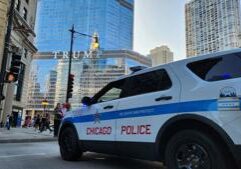
(The Center Square) – As the Chicago City Council’s public safety committee moved forward with an ordinance that would increase penalties for anyone that conducts the sale of illicit drugs near schools, one alderman attributed the blame of illegal sales of marijuana on the General Assembly’s legalization and subsequent high tax structure on the state-sanctioned products.
Alderman Gilbert Villegas put forward changes to city code in a previous hearing, which would have imposed an expansion of what areas are considered a student safety zone, effectively doubling the size.
In Tuesday’s changes to his proposal, VIllegas said the first-time penalty for selling drugs in the open within 100 feet of a school or park will now be 100 hours of community service or the participation in a restorative justice program, Additionally, he noted the ordinance would also give judges expanded discretion in the matter.
He explained the reasoning behind the measure was because state lawmakers had failed to address the council’s concerns over drug sales in specifically sensitive areas, despite decriminalizing cannabis at the state level multiple years ago.
“In the city of Chicago, if you get two or three tickets for your vehicle, you get the boot. Here, folks are allowed to sell cannabis and there’s no remediation or no path that CPD can take in order to address the issue,” Villegas said.
The alderman also noted that, because of state laws, the Chicago Police Department’s hands are somewhat tied in solving the issue in ways that don’t just result in a person being put right back on the street.
Alderman Raymond Lopez expanded upon criticisms of the General Assembly for a lack of action on the matter, noting state lawmakers failed to include law enforcement mechanisms, despite the high rate of tax on cannabis and products driving up illicit sales of the drug.
“We do need Springfield to take action, absolutely. They created a monster when they legalized cannabis, but didn’t do it with what we know are our real world experiences for street sales and how do you try to put the street seller out, which we knew was never going to happen as long as you have your tax rate being double with the price of regular marijuana is,” Lopez said.
Lopez then went a step beyond, placing some of the blame on Chicago Public Schools and the park district, which he said are not cooperating with local law enforcement to help in the legal pursuit of drug sales near spaces with children.
A representative of CPS mentioned to the committee that the law will only apply to student safety zones, which are only technically in operation from 6 a.m. to 7 p.m. on days where school is in session, along with language pertaining to public parks.
Colleagues of Villegas were previously critical of his proposal, arguing that a previous version of his measure reflected the sort of policing that decriminalization sought to address, including what they said is disproportionate targeting of African-Americans.
Due to opposition from progressives on the committee, a hearing last week recessed without any movement on Villegas’ measure.
This week, however, the adjusted version Villegas presented was ultimately recommended for adoption by the committee, and it is now set to come before the full city council during a coming meeting.


Patchy Drizzle then Partly Sunny
Latest News Stories
Pritzker defends plan to raise tolls

Court unanimously rules against homeowners seeking fair market value after tax sale

Illinois Quick Hits: Two charged with Medicare, Medicaid fraud
Fauci called to testify before powerful Senate committee in July
Poll: Americans say ‘too little’ AI regulations

Bill filed to repeal ‘punitive’ digital asset tax
Chicago court keeps block on Florida suit over kids transgender medicine
Damage costs still being assessed from record tornado numbers
DEXIT to Texas: Companies continue to leave Delaware for Texas

Pritzker open to ‘fair’ data center development, local moratoriums
DOJ announces 455 indictments in connection to billions in alleged fraud
U.S. citizenship to be focus of congressional hearing Wednesday