Census Bureau plans 2030 count as 2020 lawsuit continues
The Census Bureau is planning for 2030, making decisions that will shape the distribution of federal funding that topped $2.8 trillion in fiscal year 2021, even as lawsuits over the 2020 Census remain unresolved.
The decisions being made now will determine how hundreds of millions of Americans are represented in Congress, how legislative districts are drawn in every state for the next decade, and how much federal funding flows to programs like Medicaid and the Supplemental Nutrition Assistance Program, formerly known as food stamps.
The bureau’s 2030 planning and a federal lawsuit both center on the same question: how to protect the privacy of census respondents without distorting the population data that determines representation and funding.
America First Legal, a nonprofit law firm co-founded by Stephen Miller, now serving as President Donald Trump’s Deputy Chief of Staff for Policy, filed the suit in September 2025 in federal court in Tampa, Florida.
The group alleged that the Census Bureau’s use of two statistical methods, differential privacy and group quarters imputation, unconstitutionally manipulated population data and cost Florida two congressional seats.
Differential privacy is a statistical technique that adds small amounts of random noise to census data before publication, making it harder to identify individual respondents. The Census Bureau adopted it for the 2020 Census to protect the confidentiality of people who filled out census forms, replacing an older method called data swapping.
A three-judge federal panel dismissed the lawsuit in February as time-barred, ruling that the plaintiffs waited too long to sue. The court also rejected the standing theory of Rep. Byron Donalds, R-Fla., who had joined the case as a plaintiff.
The case drew intervenors opposing AFL, including the Alliance for Retired Americans and two University of Central Florida students. The alliance’s members include nursing home residents counted through group quarters imputation. The students lived in campus housing subject to the same method.
AFL had celebrated the case’s progress. In November 2025, the organization called its summary judgment filing “a critical step forward” that brought the case “one step closer to restoring integrity” to the census. A December news release said the case was “paving the way for the Court to decide the case in early 2026.” When the court ruled in early 2026, it dismissed the case entirely.
When plaintiffs refiled, they dropped the differential privacy challenge entirely, the method that had been the focus of AFL’s public statements about the case. The revised complaint focuses on statistical imputation, a technique the Census Bureau uses to fill in missing population data by adding people who could not otherwise be counted.
The government argues that because imputation adds people to the count, it cannot cause the undercount at the heart of plaintiffs’ claims.
The group alleged the methods cost Florida two congressional seats. But according to court filings, group quarters imputation added 16,500 people to Florida’s population count. Cory McCartan, a statistician at Penn State University who analyzed the data for the court on behalf of the intervenor-defendants opposing AFL, found that removing all of them would not have changed congressional apportionment in any state.
“The number of seats awarded to each state was not affected by differential privacy,” McCartan told The Center Square, “so there was no impact on state-level congressional representation.”
Researchers have confirmed that differential privacy did introduce real accuracy problems at the census block level, the smallest geographic unit used for redistricting. McCartan found that drawing districts at a granular level using racial data can magnify those errors, though he said other sources of census error remain larger at the district level.
Steven Ruggles, a demographer at the University of Minnesota who has studied census methodology for decades, said the Census Bureau injected so little noise into the 2020 data that they were “virtually unaffected” by differential privacy.
Ruggles told The Center Square the Census Bureau overstated the privacy threat that justified adopting differential privacy. The claim that the old data swapping method left respondents vulnerable to reidentification was “laughably exaggerated,” he said.
Ruggles rejected AFL’s imputation argument.
“If the Republicans succeeded in getting rid of it, that would disproportionately undercount places with high census nonresponse rates, particularly the South and rural areas, so it seems like this would backfire on them,” he told The Center Square.
AFL and its allies argued that differential privacy systematically favored urban, Democratic-leaning areas at the expense of rural communities.
An analysis published in November 2025 by the National Conference of State Legislatures, an organization that represents state legislatures, found that differential privacy noise tends to increase rural population counts and decrease urban ones.
Critics have blamed the Biden administration for adopting differential privacy. The Census Bureau formally announced its decision to use the method in December 2018, during the first Trump administration.
Benjamin Osborne, a legal fellow at the Center for Renewing America, a nonprofit policy organization founded by Russ Vought, now serving as director of the Office of Management and Budget, wrote in April that the census had “defrauded” the American people through differential privacy.
“The government took real communities and replaced them with statistical fiction,” he wrote. “And then it told states to draw political maps based on that fiction.”
The bureau is already planning for 2030. Its operational plan, approved in July 2025, calls for researching improvements and alternatives to the disclosure avoidance methods used in 2020. A final design will be tested in a 2028 dress rehearsal before peak production begins in 2029.
The plan also lists modernized enumeration of people living in group quarters, the same method at the center of the federal lawsuit, as a key improvement for 2030.
Ruggles said the methodology decisions being made now will have consequences beyond the privacy debate. In a March 2025 paper published in the Proceedings of the National Academy of Sciences, he said the Census Bureau’s ongoing efforts to replace the American Community Survey, the bureau’s annual demographic survey, with fully synthetic data pose a bigger threat to data quality than anything differential privacy introduced.
AFL has continued to press the case, filing a motion in May seeking production of internal Census Bureau records by June 15.
The Census Bureau did not respond to requests for comment despite being contacted multiple times over three weeks. The bureau initially said it was working on a response, then asked for additional time on multiple occasions before missing a final deadline of 5 p.m. Eastern on June 11.
AFL and Rep. Donalds also did not respond to requests for comment.
AFL’s federal case remains active, with two motions to dismiss and a motion to modify the court’s scheduling order awaiting rulings from the three-judge panel.



Sunny
Latest News Stories
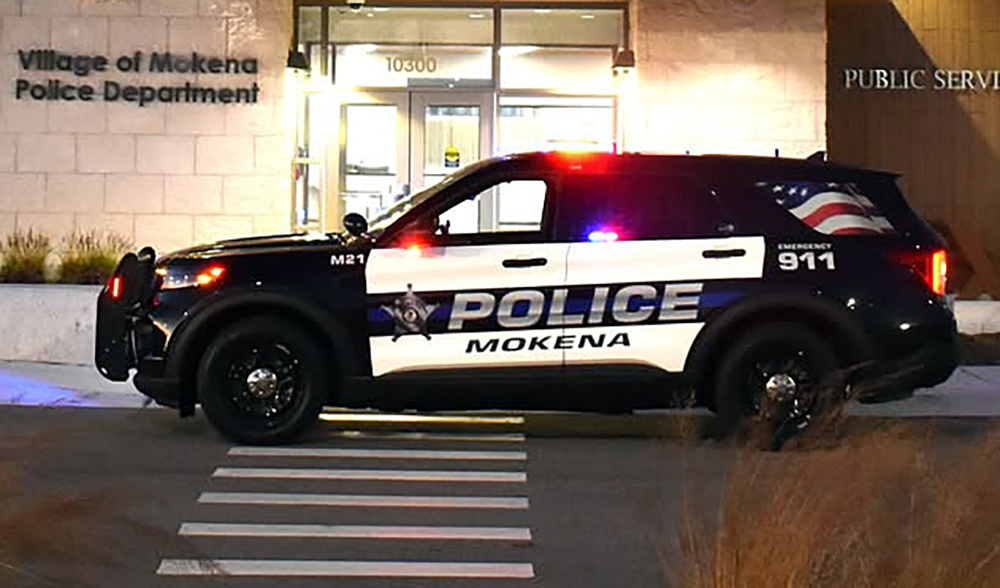
Mokena Police to Get New Axon In-Car Cameras in $176K Deal

Mokena Targets Invasive Callery Pear Trees for Removal
Meeting Briefs: Mokena Village Board for June 23, 2025
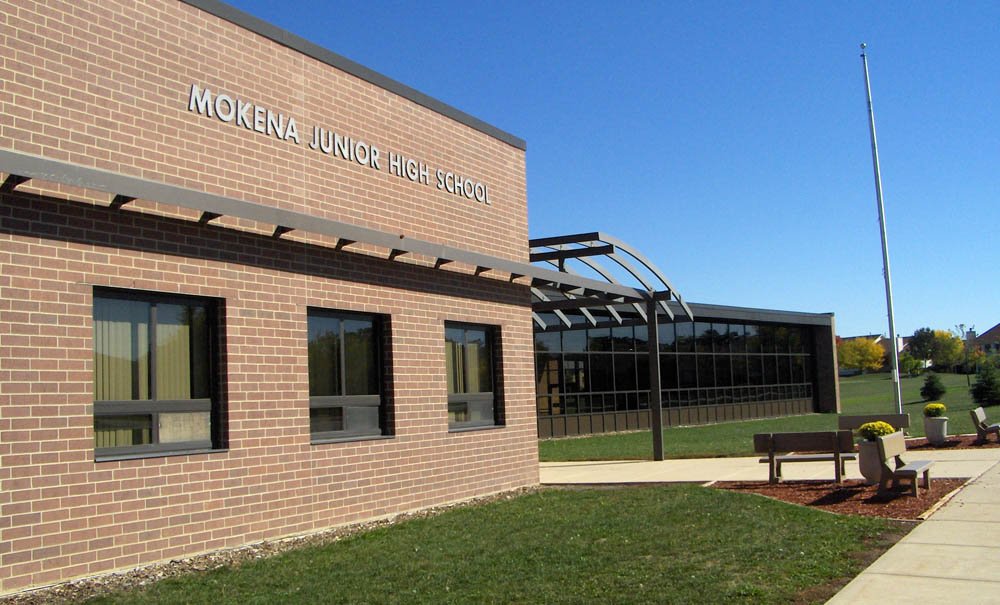
Mokena 159 Board Approves Amended Budget Amid Transparency, Deficit Concerns

Mokena 159 Board Signals Support for Recording Meetings After Public Push

District 159 Adopts ‘Wayfinder’ Program to Boost Middle Schoolers’ Social-Emotional Health
Mokena 159 Principals Report End-of-Year Academic Progress, Focus on Writing
Meeting Briefs: Mokena School District 159 for June 18, 2025
Will County Board Halts Transportation Plan After Contentious 143rd Street Debate
Will County Board Upholds Zoning Denials, Rejecting Developer Appeals
Split Vote Halts Monee Truck Terminal Project
Future Quarry Fight Looms as Board Approves ‘Tequila Barrel’ Retreat