
Exclusive: Report warns of harmful rise in social ideology in medicine
Medical journals’ tripled engagement with non-health related factors such as environmental, economic, and social well-being over the past decade as well as the phrase’s broadening scope may allow harmful ideologies to influence healthcare overall, a new report from medical watchdog Do No Harm warns.
Senior director of Do No Harm’s Center for Accountability in Medicine Ian Kingsbury told The Center Square that “the expansion of the social determinants of health framework is a serious cause for concern.”
The World Health Organization defines social determinants of health (SDOH) as “the conditions in which people are born, grow, live, work and age,” and states that “these circumstances are shaped by the distribution of money, power and resources at global, national and local levels, which are themselves influenced by policy choices.”
Kingsbury told The Center Square that “introducing new areas outside a physician’s scope is a tool to advance a leftist political ideology rather than allowing providers to focus on high-quality patient care.”
“As the concept of SDOH becomes overly inclusive and addresses complex social and economic issues, we increasingly burden physicians with solving problems far outside their clinical expertise,” Kingsbury said.
“Do No Harm is committed to ensuring the medical field is not influenced by political agendas and remains focused on recruiting and educating excellent healthcare professionals who can deliver top-tier care,” Kingsbury said.
In its report, Do No Harm listed what it considers some “striking trends” as it relates to medical journals’ engagement with SDOH.
First, the “sheer volume of SDOH-related articles has more than tripled over the past decade, rising from 69 articles in 2016 to 216 in 2024, even as the total number of journal articles increased by only 1.7 percent,” the report said.
The report noted that “articles mentioning SDOH fell to 155 in 2025, possibly indicating a slowing or reversal of the trend.”
Second, “the composition of the SDOH conversation has shifted markedly.”
The report said that “perhaps the most striking finding is the surge in discussion of race/ethnicity, racism/racial discrimination, and discrimination” as it pertains to SDOH, with sharp elevations beginning “more broadly” in 2019–2020.
Third, the report stated that “the scope of SDOH has expanded.”
“While income, poverty, and socioeconomic status remain the most commonly cited determinants, the scope of SDOH has broadened to more frequently include environmental and climate-related factors, which rose from 4 percent of articles in 2016 to roughly 14 percent in 2024,” the report said.
The report stated that these findings “suggest that the medical literature’s engagement with social determinants of health is not only growing in volume but evolving in scope and emphasis, reflecting broader social and political developments.”
Further, the report warned that the “risk” of “influential policymakers are framing an extraordinarily wide swath of issues as matters of healthcare” in the name of “social determinants of health” is “not merely imprecision but overreach.”
“Physicians and researchers making causal claims about complex social systems they are not equipped to evaluate and lending the authority of medical science to policy prescriptions whose effectiveness and feasibility have not been established,” the report said.
For its report, Do No Harm examined “1,597 journal articles published between 2016 and 2025” from the “five most prominent medical journals,” which includes the BMJ, the Lancet, JAMA, the New England Journal of Medicine, and Nature Medicine.





Mostly Sunny
Latest News Stories
Judge expands restraining order against ‘Beto’ O’Rourke, adds ActBlue
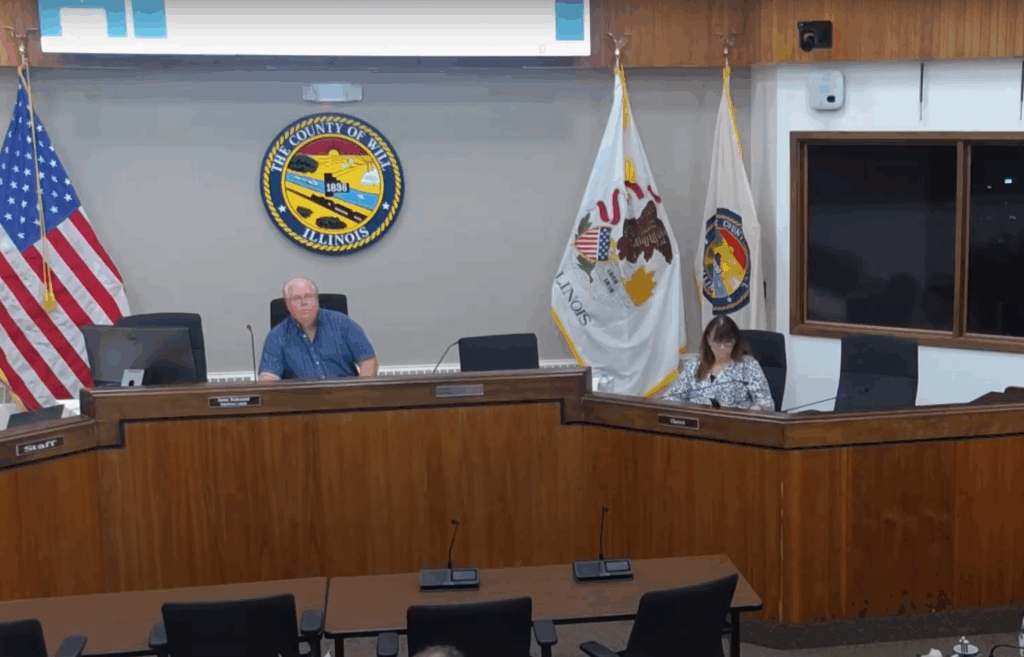
Executive Committee Members Decry Roadside Litter, Call for Action Against Garbage Haulers

Mokena Fire District Invests in Station Upgrades, Modernizes Security with Digital Key System

Reversing Biden’s precedent, students complete FAFSA in minutes at beta-testing event
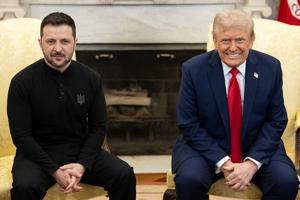
Trump, Zelenskyy to meet Monday in steps toward peace with Russia
Possible ‘agreement’ reached in Trump-Putin meeting; more discussion likely

WATCH: Gun rights supporters celebrate 9th Circuit’s ruling against CA gun rationing law

Feds sue California over emission standards for trucks
Illinois quick hits: ‘Lawsuit inferno’ bill takes effect after Pritzker signed 267 measures Friday

WATCH: UW-authored study on surgery times contradicts CMS basis for reimbursement cuts

State defends gun ban district court ruled unconstitutional

Trump aiming for ceasefire, world awaiting news from Putin summit