Oppenheimer’s grandson supports nuclear energy bill
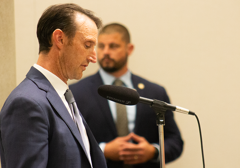
The grandson of the man who oversaw the invention of the atomic bomb spoke out Wednesday morning in support of nuclear energy development in California.
Charles Oppenheimer’s testimony before the state Senate Energy and Utilities Committee was part a push by state Democratic lawmakers to expand clean energy production.
Assembly Bill 2647, authored by Assemblymember Lisa Calderon, D-City of Industry, would require the California Energy Commission to study nuclear energy development in an effort to reach 100% zero-carbon and renewable energy goals by 2045, according to a legislative analysis.
The Senate committee Wednesday passed the bill with a 15-2 vote. The legislation, which was already passed by the full Assembly, is now heading to the Senate Appropriations Committee.
“One of the attributes is it makes the total cost of electricity lower, and it is the only path, I believe, that we have to get to the total decarbonization goal,” Oppenheimer, grandson of J. Robert Oppenheimer and founder of The Oppenheimer Project, told The Center Square at the Capitol before the Senate committee’s hearing. “We need 100% decarbonization by 2045, and not using nuclear energy is kind of an older bias. We really need to re-examine that.”
J. Robert Oppenheimer is widely regarded as the father of the atomic bomb. As part of the Manhattan Project, the theoretical physicist led a highly-classified research facility in Los Alamos, New Mexico until 1945, designing the bomb and overseeing its first successful test in the remote desert research base that summer.
After the war, he actively opposed the development of the hydrogen bomb. He died in 1967 of throat cancer.
“The idea of being pro-nuclear science and against the use of making weapons for it is something he would approve of,” Charles Oppenheimer told The Center Square of his grandfather.
“He had hope that we wouldn’t go into an arms race, and people would have a friendly impression of nuclear energy,” said Oppenheimer, who lives in San Francisco. “I think he would be broadly supportive in 2026 that we need to take advantage of the good parts of nuclear.”
While Oppenheimer testified in support of the bill on Wednesday, some had concerns that nuclear energy is a dangerous form of renewable energy.
“As you, on this committee, continue navigating the state’s clean energy transition, I understand wanting to survey all the available options,” Haakon Williams, executive director of the anti-nuclear nonprofit Committee to Bridge the Gap, testified in opposition to the bill. “My message to you is that if we want to do a study on nuclear energy, let’s do it right. This bill, as written, does not set the energy commission up to do the study right.”
Williams expressed concern that with the federal government’s deregulation of agencies that monitor the nuclear industry, decades of essential nuclear protections are being undone. He testified he is also worried that the study, as described in the bill, would not require a look at impacts on water use, emergency planning, the environment and the California economy.
“In that context, potential nuclear development needs more scrutiny, not less,” Williams testified. “This study would not consider the potential severe economic liability to our state in reactor accidents, which would cost hundreds of billions of dollars.”
California’s only operational nuclear power plant is Diablo Canyon, near Avila Beach in San Luis Obispo County. Gov. Gavin Newsom in April applauded the U.S. Nuclear Regulatory Commission’s approval of license renewals that will keep the carbon-free plant operating through 2030. According to the Governor’s Office, the plant provides about 10% of the state’s electricity.
Keeping the Diablo Canyon Power Plant open beyond 2030 would require approval by the Legislature.
Oppenheimer mentioned the plant briefly during his testimony before the committee.






Partly Sunny
Latest News Stories

Lincoln-Way 210 Awards $1.98 Million Contract for Network Cabling Upgrades
Will County Land Use Committee Splits Votes on Massive Earthrise Solar Projects Amid Intense Public Opposition

Report: Coordinated resilience infrastructure is needed in age of AI

U.S., NATO alliance on the line as Trump set to meet with Rutte

BREAKING: Trump fires Bondi, Blanche to lead DOJ
States sue Trump administration over rollback of some air pollution regulations
Energy affordability report ranks Illinois 31st, warns of ‘burdensome’ mandates
Illinois voices weigh in on birthright citizenship case

U.S. rep.: Mexico still not delivering water to South Texas, despite claims

Supporters say will storage option would streamline judicial process

Dallas Fed: Geopolitical conflicts creating uncertainty for U.S. oil and gas industry

Illinois Quick Hits: Pritzker pushes for E15