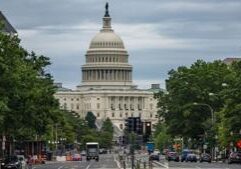
Senate committee explores ways to protect American citizenship
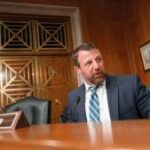
The U.S. Senate Committee on the Judiciary’s Subcommittee on the Constitution met on Wednesday to discuss the subject of protecting America’s citizenship, considering America’s 250th anniversary.
This hearing was intended to focus on issues surrounding citizenship, immigration policy and naturalized citizenship, but much of the discussion focused on the purpose of America 250 and, more specifically, Freedom 250, which the Trump administration has organized to celebrate 250 years of America as a nation.
In his opening statement, Chairman Eric Schmitt, R-Mo., reminded the committee of the history of America, including men like George Washington, Lewis and Clark, and David Crockett, a reminder to Americans that “citizenship was never supposed to be soft, it was plain spoken, independent, brave, and willing to stand when standing meant death.”
Ranking member Sen. Peter Welch, D-Vt., agreed with much of what Schmitt had to say but also reminded the committee that American’s most not forget the harder parts of their history, such as tyranny in Great Britain and slavery later in America itself.
Welch went on to state that in 2016, Congress came up with an agenda honoring America for its 250th anniversary – America 250. Yet, Welch raised concerns regarding the Trump administration’s Freedom 250, which he claims has become a celebration of an individual rather than a country, costing American taxpayers an estimated $103 million.
Witness Chris Griswold, Policy Director of American Compass, describes how the common people feel as though they have lost their citizenship, not in the legal sense but rather in the relational sense.
“People feel that we have lost our sense of shared citizenship, solidarity, mutual obligation, the agency that we have together as the American people,” Griswold said, “not citizenship in the legalistic sense, but in the thick, reciprocal, relational sense that provides the bedrock of a functional republic.”
Witness Tim Whitehouse, executive director of Public Employees for Environmental Responsibility, provided the committee with a solution to reclaiming American citizenship, stating that America must begin by reclaiming what citizenship itself means and offer a positive outlook for the future.
“We need to reclaim and fight for transparency in government, accountability in government, oversight in government,” Whitehouse said. “We need to put guardrails against the current pay-to-play politics in our system and to fight corruption.”
Witness Matthew Spalding, dean of the Van Andel Graduate School of Government at Hillsdale College, emphasizes the importance of education and how educators must begin by teaching the younger generation a basic, general narrative of American history that does not focus on politics or taking sides.
“We have a window into a lot of young people’s hearts and minds to learn something about their country,” Spalding said. “And I think we have an obligation. And the Congress and the institutions of our government have an obligation because they are teachers as well, to recover that as best as they can and to lead us in that direction.”


Mostly Sunny
Latest News Stories

Meeting Summary and Briefs: Mokena Community Public Library District Board of Trustees for July 2025

JJC Moves Forward with Major Technology Overhaul to Modernize College Operations

Meeting Summary and Briefs: Joliet Junior College Board of Trustees for August 20, 2025

New “Free Keychain Library” Offers Fun Trading Post for Mokena Community
Everyday Economics: Jobs report takes center stage in week ahead
Legislator warns bad Illinois policy continues to hurt business investment
As summer ends, budget battles and investigations await

Tensions Flare as JJC Chairman Rebukes “Entitlement” After Trustee Lists Demands
Congress to face mounting pressure to act on future of D.C.
Trump says appeals court ruling rejecting tariffs ‘highly partisan’

DOJ urges federal judge to strike down climate change law

WATCH: Newsom deploys state police to help local law enforcement