
Supreme Court upholds executive authority in immigration cases
Asylum seekers who arrive at the border are not entitled to entry and the Department of Homeland Security has broad authority over the temporary protected status program, the nation’s highest court ruled in two separate cases Thursday.
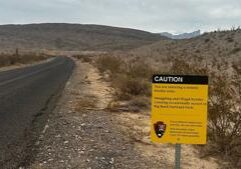
In Mullin V. Al Otro Lado, the U.S. Supreme Court reviewed cases that had been brought on behalf of asylum seekers who had been turned away at the border. The plaintiffs argued that under the Immigration and Nationality Act and other U.S. and international law, the asylum seekers were entitled to entry into the U.S. and application for admission through/under asylum.
“The Immigration and Nationality Act of 1952… governs the process by which an alien who ‘arrives in the United States’ is inspected by border officials, is deemed an applicant for admission, and may apply for asylum,” the court summary reads.
Conservative Justice Samuel Alito authored the 6-3 majority opinion, calling the matter before the court “straightforward,” with liberal Justices Ketanji Brown Jackson, Elena Kagan and Sonia Sotomayor dissenting.
“In ordinary speech, no one would say that a person ‘arrives in’ a place – for example, a house, a city, or a country – before the person enters that place,” Alito wrote. “The context in which the phrase ‘arrives in the United States’ is used in the immigration statutes at issue here supports an ordinary-meaning reading. So does the presumption against extraterritoriality. We therefore reverse.”
The ruling does not bar migrants from seeking asylum generally. It limits whether migrants who are still outside the United States can force U.S. border officials to process them before they are allowed to enter.
Alito determined that plaintiffs’ remaining arguments under other U.S. law and international law failed.
In a statement provided to The Center Square, Eric Wessan, solicitor general of Iowa, said, “Today’s decision is a decisive victory for border security and the rule of law. The Court correctly held that an alien standing in Mexico has not ‘arrived in the United States.’ That is common sense – someone hasn’t arrived in the United States if he is still in Mexico. Justice [Clarence] Thomas’s concurrence is especially welcome: it rightly underscores that Congress stripped lower courts of authority to grant class action relief to illegal immigrants. He also recognizes that compelling the President to admit aliens encroaches on his executive authority to exclude. A clear win for a secure, lawful border.”
Sotomayor read from her dissent after Alito announced the decision, a practice that observers noted is not common.
In Mullin v. Doe, in another 6-3 decision authored mostly by Alito, the court determined that the Department of Homeland Security has broad discretion over the temporary protected status program and that the law that created the program actually bars courts from reviewing related DHS determinations.
“The TPS statute plainly bars consideration of respondents’ non-constitutional claims,” the majority opinion reads.
Under former DHS Secretary Kristi Noem, the Trump administration ended temporary protected status for Haiti and Syria.
The program was created by Congress in 1990 to “provide short-term humanitarian relief for aliens who cannot safely return to their home countries,” the court summary reads.
However, if a country is experiencing continual political unrest, high levels of violent crime, religious persecution, deadly disease or devastating natural disasters, that can lead to a kind of perpetual “temporary” protected status, which the court notes.
The constitutional claim that was brought before the court concerned the 14th Amendment’s Equal Protection Clause, arguing that Noem had denied TPS to Haitians for racial reasons.
Alito said that claim was likely to fail.
“Ironically, one of respondents’ other arguments undermines the equal protection claim by offering a strong, race-neutral explanation for Haiti’s termination: namely, that the current administration, which has terminated every TPS designation that has come up for renewal, simply opposes the TPS program, at least as it has been implemented in the past,” the opinion reads.
In a statement provided to The Center Square, Hans von Spakovsky, a senior Legal Fellow at Advancing American Freedom’s Edwin Meese III Institute for the Rule of Law, and a former Counsel to the Assistant Attorney General for Civil Rights at the U.S. Department of Justice, said, “This was a simple case for the Supreme Court to decide since federal immigration law specifically bars judicial review of a decision by the executive branch to terminate Temporary Protected Status. The Court has properly slapped down lower court judges who ignored this judicial prohibition and unlawfully issued injunctions preventing the termination of TPS status for multiple groups of aliens from different countries.”
Republican Ohio Gov. Mike DeWine issued a statement opposing the court’s decision in Doe. Ohio’s Haitian immigrant community has come under scrutiny in recent years.
“As I have stated in the past, the policy to remove these individuals from this country is a mistake,” DeWine said. “As a result of today’s ruling, the over 10,000 Haitians who have been living in Ohio (mostly in the Springfield area) legally through TPS will now be here illegally and will be subject to immediate deportation. This also means that while these Haitians were working and contributing to our community and economy yesterday, today it is now illegal to employ them.”
“Changing the immigration status of these individuals is not in the best interest of the United States nor Ohio,” he concluded.
The Supreme Court has fewer than 10 cases left on its docket for this term, including a landmark case on birthright citizenship.





Chance Rain Showers
Latest News Stories

JJC Board Meeting Highlights Tensions Over Legal Bills, Trustee Conduct

Students, Trustees Emphasize Importance of Inclusivity and Flag Raisings at JJC

L-W School Board June 26 Meeting Briefs

Library Explores New IT and Copier Services Amid Equipment Failures

JJC Embarks on New 10-15 Year Facilities Master Plan Process
Meeting Briefs: Library Board of Trustees for June 24, 2025
Meeting Summary: Joliet Junior College Board of Trustees for June 25, 2025

Mokena Enacts Local Grocery Tax to Avert $850,000 Revenue Loss

Mokena Dissolves Two Committees to Streamline Development Process

Mokena Police to Get New Axon In-Car Cameras in $176K Deal

Mokena Targets Invasive Callery Pear Trees for Removal
Meeting Briefs: Mokena Village Board for June 23, 2025