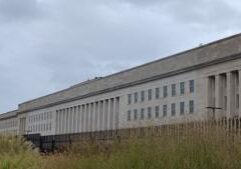
U.S. launches retaliatory strikes against Iran
United States military strikes were launched in retaliation against Iran on Friday.
President Donald Trump said the Islamic Republic targeted a cargo ship with drones while transiting the Strait of Hormuz.
U.S. Central Command announced the strikes shortly after the president teased reporters that they would “find out” if the military would respond. Trump called the attack on a Singapore-flagged ship a violation of the ceasefire.
A CENTCOM statement Friday afternoon said, “U.S. aircraft struck Iranian missile and drone storage locations and coastal radar sites after Iran hit M/V Ever Lovely on June 25 with a one-way attack drone. The Singapore-flagged cargo ship was exiting the Strait of Hormuz along the Omani coast at the time of Iran’s attack.
“The unwarranted aggression against commercial shipping by Iranian forces clearly violated the ceasefire. Furthermore, Iran’s dangerous behavior undermined freedom of navigation as commerce increasingly flows through the vital international trade corridor.”
Shortly before the strike was announced, the president while in the Oval Office was asked if he “considered the ceasefire still in place?”
“I don’t like the fact that they took a shot yesterday,” he responded. “Actually, four, we knocked down three at a ship, not an allied ship, but a ship, a very expensive ship and it was fine, but it took a little beating. They shouldn’t be doing that. So, you’ll find out.”
Two weeks ago, the U.S. and Iran signed a memorandum of understanding to enter a 60-day ceasefire.
Earlier Friday, the president accused Iran of attacking a cargo ship with “at least four one-way attack drones as ships transversing the Strait of Hormuz.” Trump added that one of the drones successfully hit the upper deck of a large and “expensive” cargo ship.
“Damage was done, but the ship was able to proceed on its way,” Trump wrote on social media. “We knocked down three other drones. Obviously, this is a foolish violation of our ceasefire agreement.”
Shortly before the attack on the cargo ship, Iran’s Revolutionary Guard issued a warning to ships that they must transit through an Iranian-approved channel.
The International Maritime Organization, which had announced the evacuation of ships through the Strait of Hormuz, has since announced a pause on the operations.
The fifth article of the 14-point MOU stated that the “Islamic Republic of Iran will make arrangements using its best efforts for the safe passage of commercial vessels with no charge” through the Strait of Hormuz.
Earlier in the week, the president touted ships carrying a “record” number of barrels of oil through the Strait of Hormuz.
The strait has been a source of contention with Iran after it effectively closed the vital waterway following the coordinated strikes of America and Israel that began Feb. 28.
As part of the MOU, the U.S. agreed to lift its naval blockade on Iranian ports, which the Trump administration estimated was costing the Islamic Republic between $400 million and $500 million a day in economic losses.
The Trump administration has requested $87.6 billion from Congress to cover the costs of the conflict, including more than $70 billion for military expenses, according to a White House supplemental appropriations request.




Mostly Sunny
Latest News Stories

Trump hosts small business owners at White House, touting business-friendly policies

DeSantis signs new congressional map into law

South Carolinian facing charges for threatening Trump will stay jailed
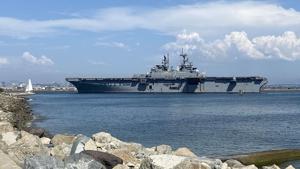
Iran testing fragile ceasefire, fires on Navy, commercial ships

Small businesses expected to feel pinch as diesel hits $6 a gallon

GOP senators renew calls to nuke filibuster after voter ID bill languishes

Illinois Quick Hits: Four charged in alleged pharmacy burglary conspiracy

LA City Council member seeks to allow noncitizens to vote

Chicago loses 2,100 restaurant jobs as industry fights mandated wage hikes

State Senator, ‘angel parent’ want to let police work with ICE
U.S. Supreme Court temporarily allows mail-order abortion pills
U.S. Supreme Court declines to hear Washington COVID-19 speech case
‘Project Freedom’ begins, two ships safely transit Strait of Hormuz