
$1.15T Pentagon funding authorization bill passes U.S. House
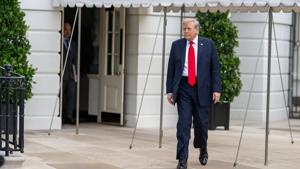
A $1.15 trillion annual defense funding bill finally passed the U.S. House Wednesday after weeks of delay.
Six Democrats joined all but seven Republicans in voting to support the National Defense Authorization Act, which outlines defense spending and authorizes Pentagon programs for fiscal year 2027.
“This legislation provides our brave servicemembers with an overdue pay raise, strengthens our nuclear deterrence and missile defense – including construction of the Golden Dome – cuts $30 billion in wasteful spending, and revitalizes America’s defense industrial base to secure our safety, security, and prosperity,” House Speaker Mike Johnson, R-La., stated after the vote.
“Safeguarding our liberties by providing for our common defense is one of our most basic responsibilities as elected representatives, and this year’s NDAA meets the moment.”
The lack of greater Democratic support for the Pentagon bill is due to a procedural rule change passed on Tuesday, which directed the House-passed NDAA to be merged with Republicans’ SAVE America Act.
Johnson had allowed the controversial rule vote to appease a group of House Republican hardliners, who in June blocked the NDAA from even reaching the floor over demands that he attach the voter ID bill.
The Senate’s 60-vote threshold for passage and near-universal Democratic opposition to the voter ID bill, however, means the House’s NDAA-SAVE package has virtually no chance of passing the upper chamber.
Senate Majority Leader John Thune, R-S.D., is expected to strip the voter ID provisions out when House and Senate leaders ultimately meld their respective NDAA versions into a final product capable of passing both chambers.
The Senate has also recently encountered obstacles to passing its own draft of the NDAA, with Democrats blocking the legislation from advancing over opposition to the Trump administration continuing to attack Iran.
Still, Senate Majority Whip John Barrasso, R-Wyo., told reporters that he hopes the chamber will hold another vote to advance the bill before Congress recesses for the month of August.
Currently, both NDAA versions have the same roughly $1.15 trillion funding topline.
Besides the usual investments in munitions restocking, shipbuilding, military construction, nuclear infrastructure, and technology innovation research, both NDAA drafts enhance cybersecurity coordination with Israel in light of the ongoing conflict in Iran.
The legislation also provides funding for securing supply chains, as well as supports new workforce initiatives aimed at boosting mining of critical minerals and raises all servicemember salaries by 3.6%, among other measures.






Partly Sunny
Latest News Stories

Vance to lead talks in Iran on Saturday

Rep questions state ed board’s higher budget request, proficiency standards

Illinois reps move bill to give remedy to young victims of hidden cameras
Illinois Quick Hits: Chicago Election Board says 94% of ballots casts were for Dems

Chicago office vacancy rates worsen, card swipe numbers offer hope

Illinois Quick Hits: Illiois gas prices keep rising

Meeting Summary and Briefs: Joliet Junior College Board of Trustees for March 11, 2026
IL Supreme Court says it can remove Cook Co. judge for pro-Trump column

FBI: Illinois’ cyber crime losses reached $535M in 2025
Minnesota, Illinois AGs challenge federal orders to keep coal plants running

FBI finds Americans lose billions to cryptocurrency scams

Illinois lawmakers seek to regulate, tax prediction markets amid federal lawsuit