Appropriations committee examines policies to end government shutdowns
With two recent government shutdowns in mind due to lack of appropriations, members of Congress are examining why government shutdowns occur and what role lawmakers should play in preventing them.
At a hearing this week of the U.S. House Committee on Oversight and Government Reform, lawmakers discussed potential reforms to the federal funding process following the shutdowns, including the longest in U.S. history. Committee members examined possible long-term solutions aimed at reducing future funding lapses while minimizing disruptions to government operations and the Americans who rely on federal services.
“We are convened to hear from sponsors of legislation to change the government funding process, to put in place permanent automatic continued funding as a default position,” Ranking Member Rosa DeLauro, D-Conn., said to open the hearing.
While recognizing that there are rare cases in which they are helpful, DeLauro said continuing resolutions (CRs), which provide temporary funding for the government when Congress has not completed the appropriations process, often make matters worse. She argued that permanent automatic continuing resolutions would be even more problematic because they could reduce the incentive for Congress to complete its annual funding bills.
While there was bipartisan discussion from both sides, U.S. Sen. James Lankford, R-Okla., highlighted legislation that he and Sen. Maggie Hassan, D-N.H., along with Reps. Jodey Arrington, R-Texas, and Jimmy Panetta, D-Calif., have been working on since 2019.
Lankford said that during a government shutdown, lawmakers are still able to leave Washington and return home. Under his proposal, however, Congress would be required to remain in session seven days a week, focused solely on appropriations until a funding agreement is reached. He argued that the measure would shift the pressure and consequences of a shutdown away from federal workers and onto Congress, holding lawmakers accountable for reaching a solution.
Rep. Tom McClintock, R-Calif., said supported Lankford’s proposal, saying it would make a simple procedural change by providing appropriations bills with the same expedited consideration in the Senate that reconciliation bills already receive.
“Now, this isn’t a cure. All the fiscal decisions attendant to the budget aren’t going to get any easier. And since the Senate and House are designed to disagree, it’s still going to require intense negotiation between the two houses. But it would at least remove the blockage that often prevents that discussion from taking place. And it reduces the temptation to misuse reconciliation in order to bypass cloture,” McClintock said.
Witness Shalanda Young, former director of the Office of Management and Budget (OMB), said she did not believe Lankford’s proposal would be the best solution, explaining that she had seen similar “autopilot” approaches in the past where the necessary work still did not get done.
She noted that the increased use of cameras and televised proceedings has contributed to more political theatrics surrounding the appropriations process. Young also opposed automatic CRs, saying they could give the president more power during budget negotiations and create opportunities for bad actors to delay or manipulate appropriations for political gain.
While Young did not present a specific legislative proposal, she agreed that changes to the government funding process are needed.
“If the goal is institution restoration, reclaiming Congress’s spending authority is a logical starting point,” Young said.
She also proposed an expansion of the appropriations committees, allowing for greater size and representation. Young called for more specificity when writing appropriations laws instead of simply relying on reports or documents and suggested technical reforms to improve the budget process.
With both parties acknowledging the need for reform, the hearing ultimately did not end with any conclusive solution, leaving lawmakers to continue debating how best to prevent future government shutdowns.






Mostly Cloudy
Latest News Stories

GOP stands up for U.S. military strikes on suspected drug boats
IL lawmakers could address energy prices, transit, taxes during veto session
Committee Advances 50% Increase in Mental Health Levy on 4-3 Vote
Will County Poised to Launch Major Mental Health Initiative Based on Joliet Program’s Success
Looming State Energy Bill Threatens to Further Limit County Control Over Solar and Wind Projects
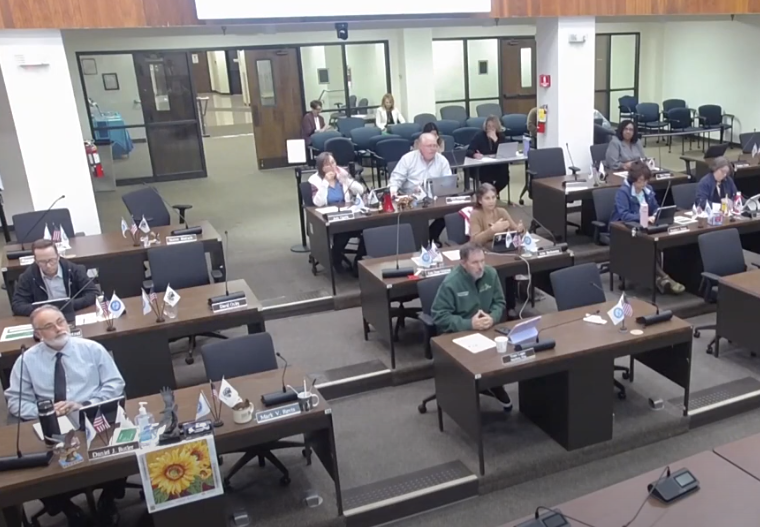
Controversial Immigrant Rights Resolution Postponed by Will County Board After Heated Debate

Trump says US troops will get paid Oct. 15 despite funding lapse

$4.5B awarded in new contracts to build Smart Wall along southwest border

Do No Harm expects FTC to take action to protect minors from transgender procedures

2024 was deadliest year for journalists on record

Govt shutdown raises concerns over national security

Ex-speaker Madigan to begin 7.5-year prison sentence Monday