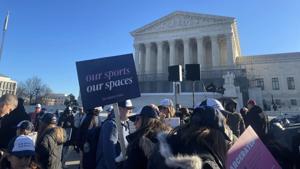

Parents challenge special ed regulation for private schools, seek SCOTUS review
Two Massachusetts families have asked the U.S. Supreme Court to decide whether the state can deny certain special education services to children whose parents choose private school, arguing the regulation forces families to choose between educational choice and access to special support.
Represented by the Institute for Justice and the Pioneer New England Legal Foundation, two non-profit law firms, the families recently filed a petition for a writ of certiorari seeking review of a ruling by the First U.S. Circuit Court of Appeals.
The case centers on a Massachusetts regulation governing where special education services are provided to students whose parents enroll them in private schools.
“All Americans suffer when courts interpret state constitutions in a way that discourages the exercise of a fundamental right,” the petition stated.
Massachusetts law guarantees special education services for eligible children regardless of whether they attend public or private school. State regulations require students attending private schools by parental choice to receive those publicly funded services at a neutral location rather than on their private school campuses.
The families argue the regulation forces parents to choose between exercising their constitutional right to direct their children’s education by selecting a private school and accessing special education services guaranteed under state law.
“For nearly as long, this Court has affirmed its ‘long-established precedent [that] parents—not the State—have primary authority with respect to ‘the upbringing and education of children,’” the petition states, pointing to longstanding Supreme Court precedent and Mirabelli v. Bonta, a recent parental rights case involving school gender notification policies.
The case was dismissed by a lower federal district court and on appeal, the First Circuit Court of Appeals affirmed that dismissal in March of 2026.
In an exclusive interview with The Center Square, Institute for Justice educational choice attorney David Hodges said the lawsuit raises constitutional questions under the Due Process, Equal Protection and Privileges or Immunities Clauses of the Fourteenth Amendment.
Hodges said the petition also asks the Supreme Court to resolve what he described as a split among lower courts over whether the unconstitutional conditions doctrine applies to parental rights.
The unconstitutional conditions doctrine is a legal rule that states a person or group cannot be forced to give up a constitutional right for the sake of public benefit.
“If parents exercise the right to send their child to a private school, then their children can still receive the benefit, but they can only receive it in a neutral environment and they’re prohibited from receiving services inside their private school,” Hodges said. “If you’re a public school student, you can receive services inside your school.
“For these students, and only these students, they’ve got to be yanked not only out of the classes, but also off the school’s premises,” Hodges added.
Hodges argued that requiring services to be provided away from the student’s school limits their usefulness.
“The regulation basically renders the entitlement totally useless, because those services need to be provided at the point of learning,” Hodges added.
Hodges said the petition goes beyond Massachusetts special education policies.
“I think that this case involves whether a fundamental constitutional principle applies to a fundamental constitutional right,” Hodges told The Center Square. “According to the First Circuit, it doesn’t.”
The families and law firms are awaiting a response from SCOTUS.
The Center Square reached out to the Massachusetts Department of Elementary and Secondary Education and its special education office for comment but did not receive a response.






Slight Chance Rain Showers then Partly Sunny
Latest News Stories

Data centers can benefit taxpayers, group says

Illinois wheat harvest looks good despite storms

WATCH: Free speech lawsuit targets University of Minnesota gender policies

Microsoft’s 1st Mt. Pleasant data center fully online with 500 employees

Group works to promote ‘pro-life safety net’ to care for abortion-vulnerable moms

Illinois Quick Hits: $50.8M in cannabis tax-funded grants awarded

Poll: Americans reject legal rights, ‘personhood’ for AI

New gun rules may be needed in IL after SCOTUS marijuana gun rights ruling

Exclusive: Report warns of harmful rise in social ideology in medicine

Congress sends major housing bill to Trump’s desk
Elusive Trump endorsement helps define Colorado race

Another DEXIT: Axiom Space redomiciles in Texas