Trump ‘final dealmaker’ on Saudi nuclear deal, Leavitt says
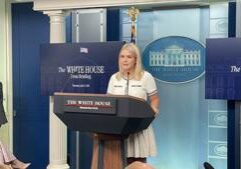
President Donald Trump is working on possible nuclear deal with Saudi Arabia that would stand for three decades and involve U.S. companies, White House Press Secretary Karoline Leavitt said Thursday.
The president announced a deal that would allow Saudi Arabia to develop a civilian nuclear program if it agreed to the Abraham Accords, a cooperation between Israel and majority-Muslim nations in the Middle East.
The deal is expected to last 30 years and could include U.S. companies helping develop the program through exports. The administration has not publicly released the a framework for a deal. Trump has stressed no nuclear material would be enriched as part of a potential deal.
Leavitt said the nuclear deal would only pertain to non-military use in Saudi Arabia and that Trump has pushed for the countries across the Middle East to normalize relations with Israel.
“He wants to see these countries sign the Abraham Accords,” Leavitt said. “It was one of the most historic accomplishments of his first term and it continues to be a long-term goal of his to expand those accords and ultimately come to a place where the Middle East can be a peaceful and stable region.”
Leavitt said Trump is the “final dealmaker” when negotiating nuclear programs with the other nations. She said the president has spoken numerous times with Saudi Arabian leaders on the deal and made them aware of the need to agree with the Abraham Accords.
“The deal that has been discussed thus far and will continue to be discussed absolutely puts America first and that’s obviously very important to this president,” Leavitt said.
She said Trump has spoken to Mohammed bin Salman, the leader of Saudi Arabia, about the deal several times in previous meetings. Saudi Arabia has previously said it would not enter into the Abraham Accords unless there is recognition of a Palestinian state.
Leavitt also denied that Israel Prime Minister Benjamin Netanyahu asked for a provision to be included in the deal that would require Saudi Arabia to sign on the Abraham Accords.
“It was the president and his team in the first term that began and signed the Abraham Accords with several countries in the region,” Leavitt said. “The president obviously wants to expand on that historic accomplishment from his first term.”
The nuclear deal would need approval from Congress before it is implemented.






Mostly Sunny
Latest News Stories
Chicago posts fewest homicides since 2016, arrests rate also declines
Three years later, Inflation Reduction Act blamed for higher Medicare costs

Illinois quick hits: Prosecutors charge two more in Tren de Aragua case; Senate Energy and Public Utilities Committee meets today; Illinois Little League team loses in World Series

Report: Human Rights Campaign pressures transgender procedures on minors

Everyday Economics: Housing market and Fed policy in focus in the week ahead
Executive Committee Considers $12,000 Strategic Planning Initiative with University of St. Francis
Mokena Fire Board Appoints Surdel as Commissioner, Increases Office Coordinator Hours

Businesses brace for new tax challenges amid global tariff focus

Illinois takes over health insurance marketplace in 2026 amid skepticism
WATCH: IL state reps challenge IEMA-OHS responses to local agencies
Judge expands restraining order against ‘Beto’ O’Rourke, adds ActBlue
Executive Committee Members Decry Roadside Litter, Call for Action Against Garbage Haulers