
Taxpayer funds used in climate change research that detractors have criticized
Lawmakers in Congress and President Donald Trump scrutinized a nonprofit research academy that has received millions of dollars in taxpayer-funded federal grants while producing a report linking global energy companies to climate change.
The National Academy for Sciences, Engineering and Medicine released a report titled “Attribution of Extreme Weather and Climate Events and their Impacts,” which used attribution science to link greenhouse gas emissions from particular energy companies to local climate change events.
The group does not receive direct congressional appropriations, instead it earns money from federal contracts and grants. In 2024, the national academy received more than $205 million in contracts from executive agencies.
“The use of larger ensembles of climate model simulations is enabling researchers to more effectively separate the human-caused climate signal from natural variability,” the report reads.
President Donald Trump and lawmakers in Congress have called for an investigation into the national academy. The president ordered federal officials to review conduct of the academy.
“Our taxpayers should not be funding Climate Fraud, and judges should never have relied upon it,” Trump wrote on social media.
The report ties human activity and greenhouse gases to increased local weather events, including El Nino patterns and hurricane activity. The research compares models with and without human-involved activities, including oil and gas drilling, to determine whether there is a link to increased climate variability.
The academy reports are often used as reference manuals for federal agencies, the judiciary and other policymaking organizations and have been criticized in the past. The group has also received funding from several prominent organizations tied to climate change proponents.
“Radar, satellite, and on-site observations have expanded in terms of area and length of time covered, resulting in additional data to support EEA analyses for many regions,” the report reads.
Reps. Eric Burlison, R-Mo., Lauren Boebert, R-Col., and other lawmakers called on the Office of Management and Budget to cancel the National Academy’s contracts with federal agencies.
The lawmakers also highlighted the academy’s lack of peer review on its climate change chapters and other published content. Lawmakers asserted the report’s authors had conflcits of interest when writing the climate science chapters.
“There are clear conflicts of interest as the climate science chapter was written by academics funded by the very same groups behind many climate lawsuits, including the for-profit law firm Sher Edling – best known for representing state and local governments in numerous lawsuits against oil and gas companies seeking enormous compensation for damages allegedly caused by climate change,” the lawmakers wrote.
The National Academy has received $32.4 million from the W.K. Kellogg Foundation, $18.9 million from Andrew W. Mellon Foundation, $15.9 million from the MacArthur Foundation and $11.7 million from the Hewlett Foundation, according to the group’s financial disclosures.
The W.K. Kellogg Foundation has advocated for climate change policies including combatting “environmental racism,” and “disproportinate pollution.” Additionally the Andrew W. Mellon Foundation dedicated funds for a climate change museum, designed to link environmental issues to human causes.
The MacArthur and Hewlett Foundations have called for greenhouse emissions to be halved by 2030 and at net zero by 2050.
The report said it did not fully address the issues surrounding human-related climate change correlations and called for more investments to be made in the research and development.
“The field is still an emerging area, with substantial opportunities to advance the methods and expand investigations internationally and across various impact types,” the report reads.
Justices on the U.S. Supreme Court are expected to hear Suncor v. Boulder County Commissioners, a pivotal case examining whether state and local governments can prevent energy companies from engaging in global emissions activities that contribute to climate change.
In Boulder County, officials attempted to institute nuisance laws to prevent energy companies like Suncor from emitting pollutants. Nuisance laws are typically used to deal with discrepancies between neighbors where an individual may be conducting business that harms another’s property interest.
“These issues directly contradict NASEM’s own promises of integrity, objectivity, and independence from outside influence,” the lawmakers wrote.






Sunny
Latest News Stories

Chicago council approves ballot question to recoup costs from ICE operations

Anti-ICE ‘extremist’ charged with arson in attack outside NYC federal building

Sales tax hike to hit Cook, collar counties on Aug. 1

Illinois news in brief: House Democrat joins calls to release Benton report; State EV rebate program to begin Aug. 1; Member of armed robbery crew gets 15 years in prison

Ethics complaint alleges District 214 used tax dollars for poll polling
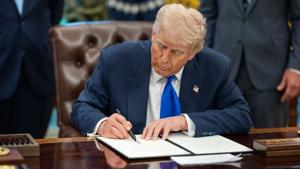
Trump gives boost to Lebanese relations; puts squeeze on Iran in the process

Illinois news in brief: State police use grant money to recover 342 stolen vehicles; State launches Blue Envelope program; Treasurer: State returned $307.8 million in I-CASH

Biden recordings case could head to U.S. Supreme Court

Pritzker touts climate, green energy record as capacity leaves, rates rise

Warren will campaign this weekend for El-Sayed in Michigan

Trump hits Canada with new tariffs Congress may be powerless to stop
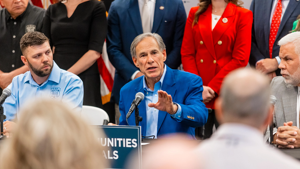
Abbott directs healthcare, regulatory agencies to target birth tourism in Texas

Fugitive accused in $547 million Medicare fraud scheme captured