As pennies disappear, businesses turn to hoarding, rounding
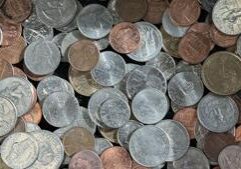
Americans can continue to spend pennies, but few businesses are giving them back as the coin’s 232-year run comes to an end.
Some businesses have been preparing for months, stockpiling bags of the 1-cent coin. Others have created rounding systems to arrive at the nearest nickel. For consumers, the shortage of pennies might be insignificant. But it’s creating headaches, math challenges, legal questions and costly compromises for businesses nationwide.
President Donald Trump announced the penny’s end in February, noting that it cost taxpayers about 3.69 cents to make each one. The U.S. Mint stopped making pennies earlier this year, with a ceremonial final strike last week, but the federal government hasn’t provided instructions on how to deal with its demise, something businesses requested.
Congress created the penny with the Coinage Act of 1792. It’s featured the bust of Abraham Lincoln, the nation’s 16th president, since 1909. Over the past decade, the cost of making each penny has increased from 1.42 cents to 3.69 cents per penny. Australia ditched it’s penny, featuring a kangaroo, in 1992. Canada got stopped making its version in 2012. However, the coin still circulates in many countries, including parts of the European Union. Ending production of the penny will save taxpayers $56 million a year, but it could cost small businesses.
Most businesses that aren’t hoarding pennies have switched to some form of rounding or requiring exact change.
Jeff Lenard, vice president of the National Association of Convenience Stores, a trade group, told The Center Square that retailers have three bad options for now. The first is rounding down all cash transactions in the customers’ favor. The second is to round to the nearest nickel. The third, and most frustrating for these stores, is encourage customers to use plastic.
“This is the worst option of them all,” Lenard told The Center Square. “Paying by plastic incurs swipe fees, which are significant.”
Rounding down in the customer’s favor also comes with costs, Lenard said. Every day, convenience stores process 160 million transactions. About 125 million are inside the store and about half of those are in cash. Each cash transaction requires 2 pennies in change on average. But that 2 cents can add up quickly in an industry with lots of transactions and narrow margins. Two cents would cost the industry about $1.25 million every day, NACS estimates.
Rounding also comes with other challenges. Delaware, Connecticut, Michigan and Oregon require retailers to have cash and exact change. Also in that camp are Berkeley, Calif.; Newport Beach, Calif.; San Francisco, Calif.; Washington, D.C.; Miami, Florida; New York City, New York; Philadelphia, Pa.; King County, Washington; and Snohomish County, Washington.
“This option, based on various existing state and federal regulations, subjects retailers to possible fines or lawsuits down the road,” Lenard said.
Kwik Trip, the family owned La Crosse, Wisconsin, company that operates 900 convenience stores that serve 12 million people a week, started rounding to the nearest nickel in October. The company said it will continue this approach “until a permanent legislative solution has been enacted.”
Kwik Trip’s new cash register systems automatically round all cash transactions down in the customer’s favor.
“At Kwik Trip, we’re committed to making everyday transactions simple and fair,” Scott Zietlow, the company’s president and CEO, said last month. “This change reflects our ongoing focus on guest experience. We apologize for any confusion this may create for our guests.”
Kroger – which operates 2,700 grocery stores, 32 manufacturing plants, and 1,700 fuel stations – asks cash-paying customers to consider providing exact change because of the shortage.
However, the penny isn’t going to disappear. The U.S. Mint made 3.2 billion pennies in fiscal year 2024. The Mint estimates there are about 300 billion pennies in circulation, which it said far exceeds the amount needed for commerce. It further noted that “retailers and other businesses can continue to price goods and services in one-cent increments.”
The American Bankers Association noted the shortage of pennies isn’t acute.
“It’s not a shortage in the traditional sense – there are plenty of pennies out there,” according to the trade group’s statement. “But circulation is slowing down. Many people stash pennies in jars or drawers, and without new ones being minted, banks and retailers are relying solely on recycled coins. This has created localized supply issues, especially in areas where coin terminals have been shut down.”
Most of those terminals are now closed. Still, the penny isn’t going away. Each penny – like other coins – lasts about 30 years, according to a 2019 report from the Government Accountability Office.
Community Events
Latest News Stories
Will County Planners OK Oversized Garage Near Naperville, Overriding Staff Recommendation
Green Garden Landscaping Business Gains Permit Amid Strong Neighbor Support

Meeting Briefs: Will County Planning and Zoning Commission for July 15, 2025

Mokena Overhauls Zoning Code to Streamline Rules for Sheds, Pools, and Patios

Frankfort Approves ‘Whisk & Flame’ Culinary Studio, Slashes Parking Requirement for Downtown Property
Frankfort Village Board Adopts $59.4 Million Appropriation for Fiscal Year 2026
Mokena Awards $472K Contract for Countryview Estates Storm Sewer Project
Frankfort Establishes New Zoning Rules to Attract Data Centers

Fiber Internet Provider Pavlov Media Details Plans to Expand into Mokena
Currie Motors Expansion Gets Approval with Site Modifications

Mokena Celebrates Successful July 4th Events, Honors Parade Winners
Frankfort Approves $134,531 Maintenance Contract for Wastewater Plant Filters